
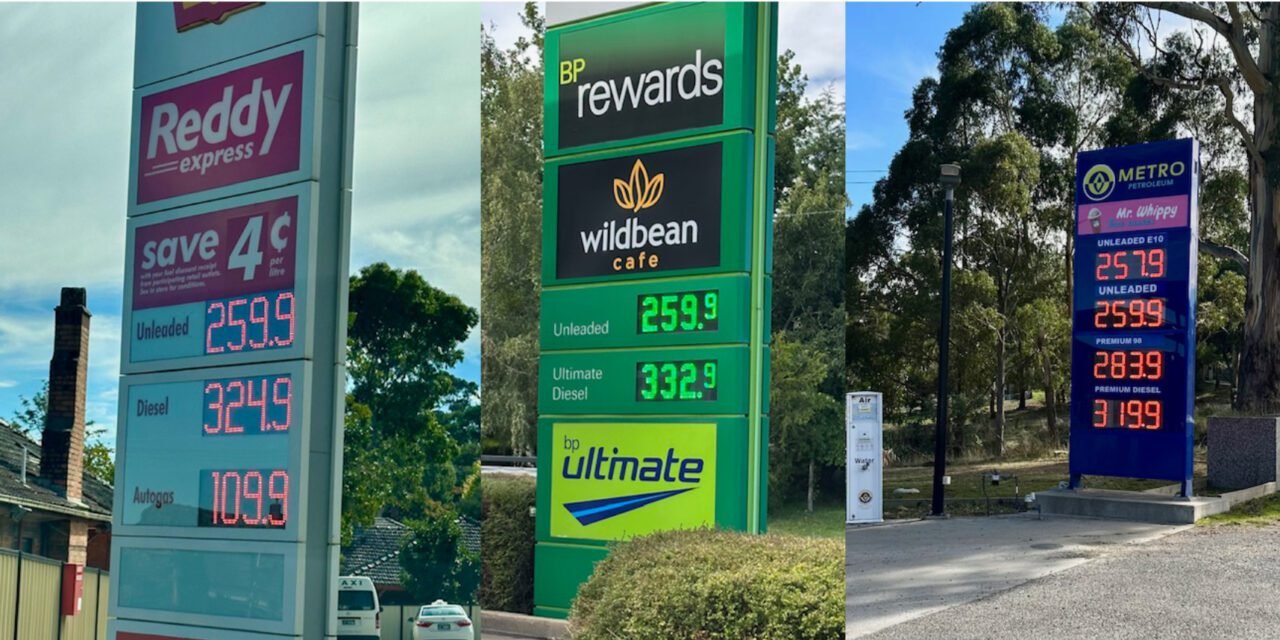
The recent surge in petrol and diesel prices has had a dramatic impact locally. Overall, fuel prices have gone up by around 50 percent since February – a rate rarely seen in recent decades – leaving local motorists and businesses to grapple with a rapidly shifting economic landscape.
The Regional Toll: Daylesford on the Front Line
For a community like Daylesford, high fuel costs are not merely a domestic inconvenience. Our local economy, built on the twin pillars of tourism and agriculture, is a high-intensity fuel consumer.
It is not just the direct cost of filling up the car, ute and tractor. When diesel prices rise the cost of transporting essential goods to Daylesford increases. We will see this reflected in “shelf-price” inflation at our local supermarket, hardware stores and farm supplies.
Unlike our metropolitan counterparts, residents in the Hepburn Shire have limited public transport alternatives. For many, driving to medical appointments in Ballarat or Melbourne is a non-discretionary expense. For lower-income residents and our local volunteer sectors, these costs are forcing difficult trade-offs between mobility and other essentials.
The National Fuel Security Plan
In response to the crisis, the Commonwealth Government convened an emergency National Cabinet on March 30, 2026. The resulting National Fuel Security Plan includes several immediate measures designed to provide a “breather” for regional communities:
- Temporary Excise Cut: Effective April 1, the federal fuel excise has been halved. This reduces the cost of petrol and diesel by 26.3 cents per litre, offering a saving of roughly $17 to $20 on a standard family tank.
- Supply Chain Relief: The Heavy Vehicle Road User Charge has been zeroed out for three months to help stabilize the cost of freight and prevent further spikes in the price of groceries.
- Strategic Reserve Release: The government has tapped into 20% of the national fuel reserves, specifically prioritizing regional hubs where supply shortages were beginning to emerge.
- ACCC Oversight: The competition watchdog has been granted enhanced powers to ensure these tax cuts are passed directly to motorists rather than absorbed by retailers.
If the situation worsens the Prime Minister has flagged that nationally consistent measures to reduce fuel demand, such as “work from home” mandates and subsidized public transport might be needed. If we begin to run out of fuel a legal prioritization framework would be enforced to strictly allocate remaining fuel to life-supporting services, emergency responders, and critical food supply chains.
The Outlook
Despite current media reports of comments made by the US President, it is not yet clear when the conflict in the Middle East will end. Nor is it clear what actions Iran will take in opening up shipping, even if the conflict ends. If restrictions are fully lifted, the expert advice is that there will be an immediate drop in international oil prices that will flow through to the bowser in Australia over a period of a month or so, but fuel prices will remain substantially higher than before the conflict began for some time. Shipping is backlogged, and it will take 6 months or more to repair liquid fuel infrastructure that has been damaged.
Not surprisingly demand for electric vehicles has jumped. Online searches for affordable EVs had increased by more than 100 per cent in the last month. Long haul drive holidays and on the go caravanning are giving way to short haul and stay in the caravan park travel. Farmers are adjusting their machinery use to and considering their fertiliser options and cropping cycles to reduce costs. Motorists looking for the best deal on fuel are using apps like servo saver.
The Wombat Post and Daylesford Rotary have organised two Daylesford Conversations to discuss the transition to renewables and strategies for reducing your electricity costs over the next month. Check them out here.