

Some readers will know me from my 37 year career at Springs Medical, and it antecedents, in Daylesford and Trentham.
‘Semi-retirement’ in February 2023 enabled me to return to my rural GP roots with a strong interest in emergency medicine.
Like my contemporaries who you may know – Dr Greg Malcher to Halls Gap and other locations mainly around Victoria; Drs Greg Stewart & Beth Quin also to Halls Gap, plus Broken Hill (with Royal Flying Doctors Service), Elcho Island in the East Arnhem Region of Northern Territory, and others; and Dr Gerard Ingham, Katherine, Northern Territory – I too was keen to work more remotely where I would need to update and use my emergency medicine skills, and thus could support communities and colleagues who have less resources than us in the Central Highlands of Victoria.
And I quickly realised the need to up-skill in tropical medicine, and the exceptional health risks and health needs of Indigenous Australians, especially those living remotely.
So this article will introduce and describe some of the differences I have encountered so far upon going bush, and some similarities too, and deliver some take home messages that we can all apply to ourselves, our loved ones, and our communities.
Help can be a long way away
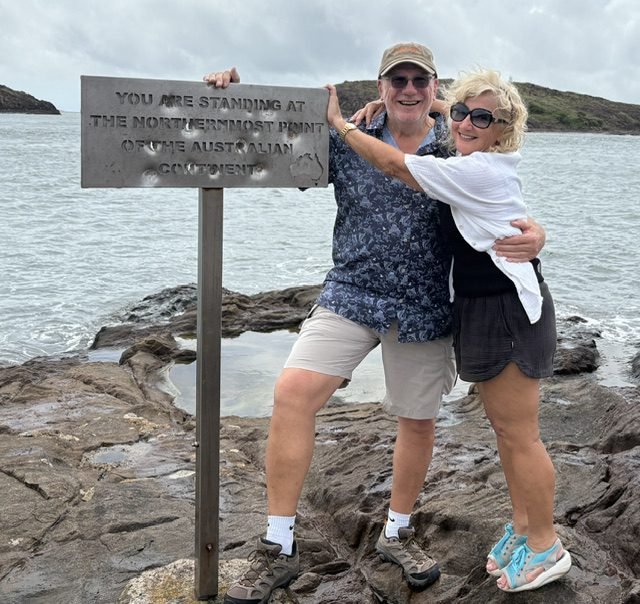
I’ve been doing a regular stint ( 3-4 fortnights per year) at Bamaga, Cape York, Far North Queensland.
Bamaga is only 34km from the tip of Cape York, which in turn is only 150km from Papua New Guinea (PNG).
Which means the local population is a wonderful mix of Aboriginal and Torres Strait Islanders (ATSI) with their own long, rich and fascinating heritages, along with contributions from PNG, Indonesia and others.
And thus Australian Defence Force and Australian Border Force both have a presence in the region, and the public health authorities manage those from PNG who may present for health care too!
For health situations that we cannot manage locally, Cairns is a 2 hour flight away, but medical retrievals may take a lot longer than that, especially when there is bad weather or conflicting demands on the service.
All of which contribute to the profound differences in health outcomes between metropolitan Australia compared with rural and remote.
Childhood skin and throat infections pose particular problems in children risking a cascade that can lead to Acute Rheumatic Fever and Rheumatic Heart Disease (rarely seen in Hepburn Shire) and the development of heart failure and the need for heart valve replacement.
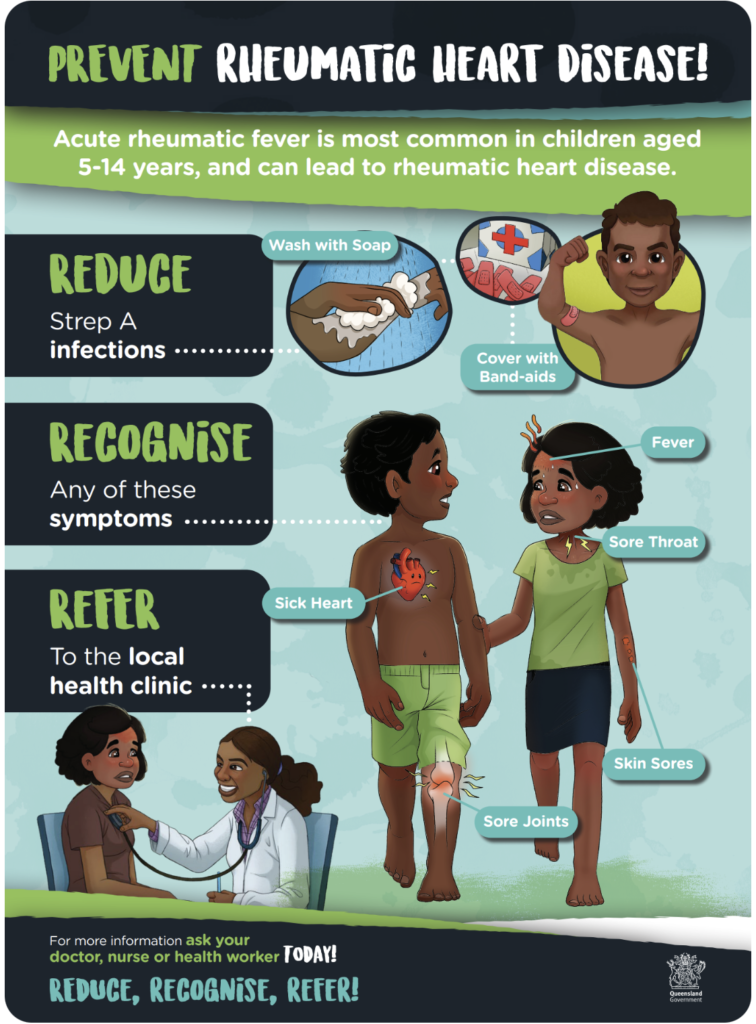
And those same infections can also cause Acute Kidney Disease leading to Chronic Kidney Disease with associated kidney failure, kidney dialysis treatment and the need for kidney transplant if possible.
Thus the policies around antibiotics for sore throat, cuts and school sores are very different in these communities.
A child goes scavenging, for turtle eggs perhaps, slips on rocks and a simple cut in the tropics can pose great risks.
I’ve had 9 trips to Bamaga so far, working with a small but dedicated team and the vibrant and varied people of the tip of Cape York and more than 270 Torres Strait islands (of which 17 or so are still inhabited).
It has been a privilege to serve them, and their very warm and safe communities have taught me so much, and their preventative health messages around hand, face and cough hygiene apply to all of us.
Rural farming communities in remote South Australia
And I’ve also done locum fortnight’s in 9 different locations in SA in places such as Lameroo & Pinnaroo in the Mallee, Meningie in the Coorong, Cummins in the Yorke Peninsula, and Wudinna and Streaky Bay in the Eyre Peninsula.
These are mostly 1 or 2 doctor towns, 2 hours drive or more from a regional hospital, most medical retrievals would go to Adelaide.
I am so impressed by the resources these small hospitals have, and the quality of their nursing and other teams.
Notwithstanding the beauty of these locations, mental health issues are common here too, but access to the usual health care professionals can be more limited.
Telehealth and video consultations have become more frequently used since the COVID pandemic and resources like Lifeline and This Way Up are very helpful.
thiswayup.org.au is a team of clinicians, researchers, and web technicians, and is one of three departments of the Clinical Research Unit for Anxiety and Depression, a joint facility of St Vincent’s Hospital and the University of New South Wales established in 1964 to reduce the impact of anxiety and depressive disorders for Australians.
I believe they have established that on line learning can be as effective as face to face counselling, if not more so, and it is cheaper (there is small cost for self referrals, which is waived by government funding for GP referrals), it is available immediately rather than waiting to find and see a therapist and pay for same, and can be done at any time of the day or night on any connected smart device without waiting for the patient’s schedule to match the therapists schedule!
A recipe for good mental health
And I always advise that exercise is great for our mental health – even walking – especially walk hard and fast – raise the heart rate, work the lungs, maybe leave the earphones out and just look up and enjoy the trees and the sky.
It’s hard to worry about stuff when you’re concentrating on posture and walking briskly.
Meanwhile, I commonly remind patients of what I call Psychology 101, copied from a Clinical Psychologist in the popular press years ago.
- Someone or something to love – it could a partner, a child, a parent, a pet, the garden, whatever?
- Something that you are passionate about – a favourite hobby or activity – cooking, gardening, reading, listening to music that is soothing for you, a regular gym session, anything?
- Something to look forward to – maybe a series of minor and major things – a catch up with a friend later in the week, a regular gym session, a movie, an outing – who knows?
In my opinion, if you can find a way to tick these 3 boxes, you should be in good shape.
I’m writing this from a 2 week locum in Quilpie, SW Queensland closer to Birdsville than Brisbane.
Thank you Hepburn Shire for teaching me the things I needed to enable me to take this next leap.
See you later.