The fragility of peace and the need for vigilance in the face of aggression and of other existential threats to our community life is cause for serious reflection on the eve of our upcoming Anzac Day commemorations. The Middle East, Ukraine, the South China Sea are all actual or potential flashpoints. Few people realise that young Australian soldiers, sailors and airmen and women are actively involved in all of these theatres, albeit in non-combat roles.
Give a thought to their parents, families and loved ones who suffer a constant level of fear for their safety and for what the future might hold for them and for all the other service personnel who have volunteered to protect our nation should the need arise.
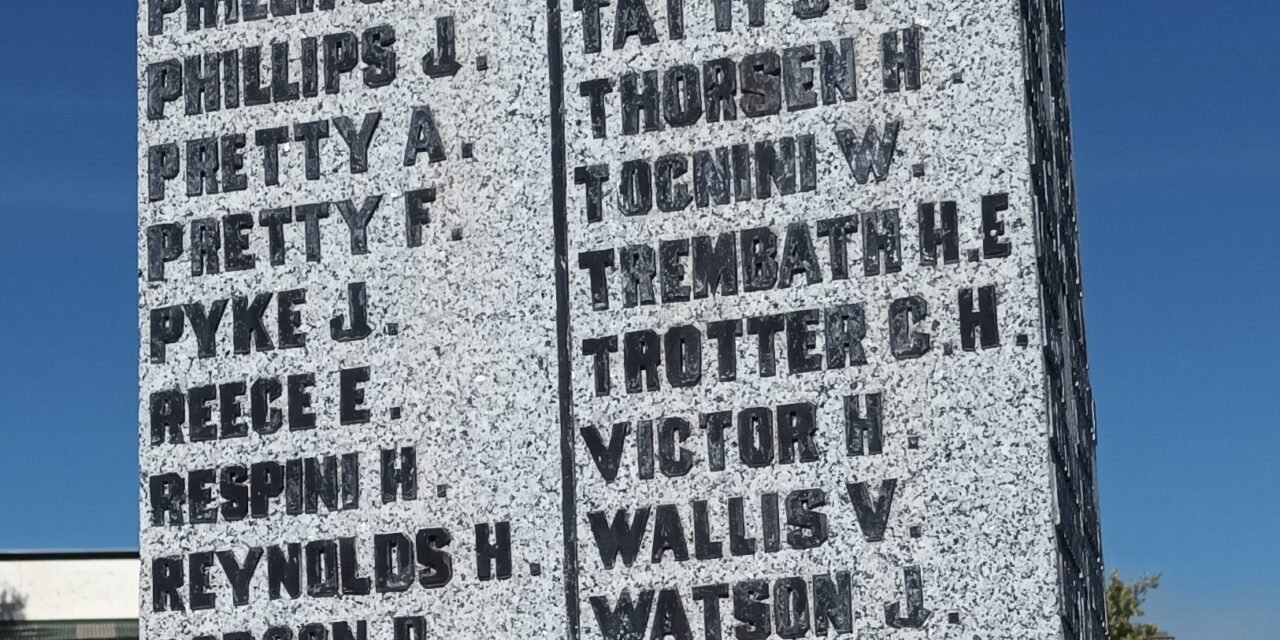
Transfer that thought to how the members of the Daylesford community felt in 1915. There is no record of the total number of Daylesford men who enlisted to defend Australia in The Great War. But we do have a record of those who did not return from those overseas battles. Their 218 names are listed on the Memorial at the end of Vincent Street.
Think of the anxiety suffered by their families as they sailed off to distant shores. Imagine the worse anguish when they received the dreaded news that their son, husband, father, uncle, friend was killed in defence of Australia.
Two of those, whose names appear on our Cenotaph, are Frederick Victor Pretty and Alfred Pretty, both of Daylesford, sons of Robert and Maryanne Pretty.
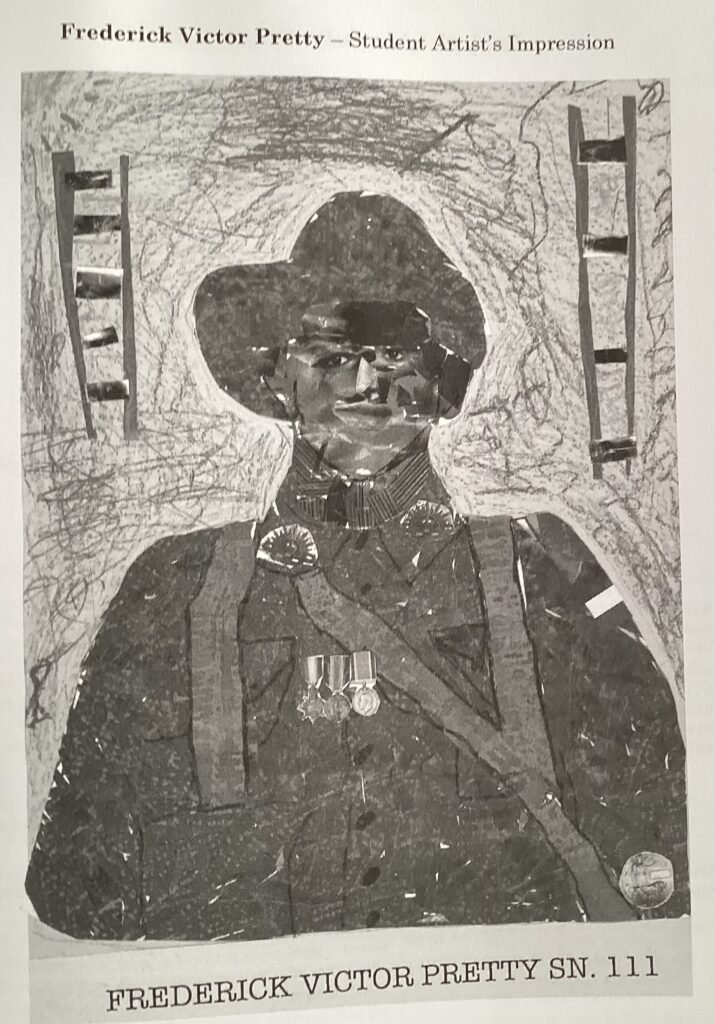
Frederick Victor Pretty
Fred, a sleeper hewer, was 24 years old when he sailed for the Middle East on the troopship Ceramic on 22 December 1914. He landed at Gallipoli in April 1915. He was declared missing and later pronounced killed in action on 3 May 1915. There is no known grave for Fred, but he is memorialized at the Lone Pine Memorial, Gallipoli.
Though his body was never found, an inquiry carried out by the Red Cross suggested he was shot while carrying out orders to retreat from a trench at Gallipoli. The retreat went wrong and Fred, along with 770 of 900 soldiers in his 16th battalion were killed or wounded.
Imagine the grief that overwhelmed his family when they received the dreaded news.
But there was worse to come for Fred’s family.
Alfred Pretty
Fred’s younger brother, Alfred, a carpenter, was 23 years old when he sailed on the troopship Hororata on 19 October 1914. He had been a keen member of a rifle club before enlistment. He, too, landed at Gallipoli in 1915 as a member of the 6th Battalion.
Alfred was wounded in action, receiving a gunshot wound to the head. He died in hospital in Alexandria less than a week later on 19 May 1915 – just over a fortnight after his brother Fred was declared dead. He is buried in the Chatby War Memorial Cemetery in Egypt.
The grief and horror suffered by the boys’ family must have been unbearable.
Yet generation after generation of Australian families have ‘given up’ their loved ones who have joined our Defence Forces to protect our nation.
On this coming ANZAC Day we recall with gratitude the deaths of Fred and Alfred Pretty and the thousands who have given their lives over the decades so we may enjoy our way of life. We also acknowledge the fears and stresses of their families and loved ones, and those of our current Defence Force personnel who stand ready to ‘go in harm’s way’ for us.
LEST WE FORGET.
ANZAC day services will be held locally at Daylesford, Hepburn Springs, Bullarto and Eganstown. Details on locations and times can be found here. Bullarto will host its now traditional, small indoor service at the Bullarto Hall, in Bullarto South Road at 2.00 pm with local speakers,the Bullarto Primary School pupils, singer Sallie Harvey and bugler Peter Collins from Daylesford Community Brass Band.
Bring a plate for the get together afterwards.