

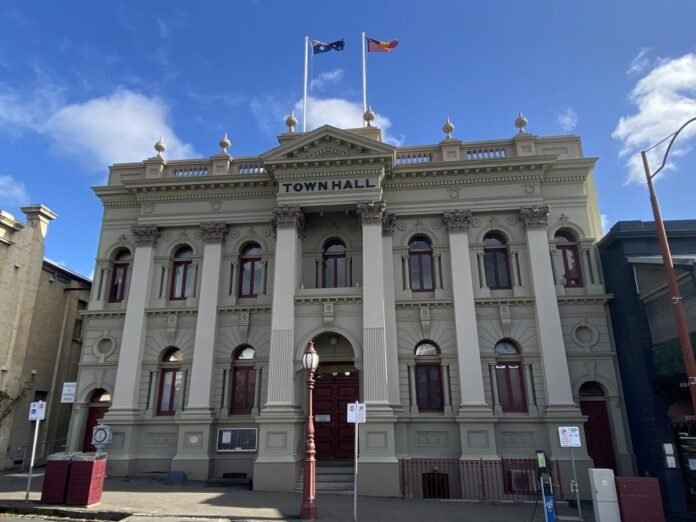
Hepburn Shire Council will be asked next Tuesday to step up its advocacy for an urgent change to Victorian law, after a private prosecution triggered the automatic suspension of a sitting councillor.
A private prosecution is a criminal proceeding brought by a private individual or body rather than by police or a public prosecuting authority such as the Director of Public Prosecutions. In Victoria, the right derives from section 26 of the Criminal Procedure Act 2009, which allows any person to commence a criminal proceeding by filing a charge-sheet with the Magistrates’ Court registrar (subject to limited statutory exceptions where a particular Act requires the consent of a specific officer to prosecute). The informant must then prove the alleged offence to the criminal standard — beyond reasonable doubt — just as a public prosecutor would. The mechanism acts as a safeguard allowing citizens to enforce the criminal law where authorities decline to act, but it carries real checks: the matter proceeds through the ordinary courts, and the Director of Public Prosecutions has a standing power to intervene and take over a private prosecution, and to either continue it or discontinue it (enter a nolle prosequi) if satisfied that doing so is in the public interest.
At issue is section 229 of the Local Government Act 2020, which provides that a councillor charged with a specified criminal offence is automatically stood down — suspended from their duties, restricted from Council premises, and with allowances withheld — until the charge is withdrawn or finally determined. The provision was strengthened through 2024 amendments intended to bolster governance and public confidence by standing down councillors facing serious charges.
The report, authored by Chief Executive Officer Bradley Thomas, points to what it describes as an unintended consequence: the law does not distinguish between charges laid by authorised investigative bodies and those initiated by a private individual. A private individual has initiated a criminal charge against a councillor through the Magistrates’ Court, automatically activating section 229 without any prior investigation by an authorised agency or testing of the evidence.
The report sets out a series of governance risks. A private individual could, it argues, lay charges to alter the composition of Council ahead of a significant decision, potentially manipulating outcomes to suit private interests. Charges laid against multiple councillors could deny Council a quorum, preventing it from adopting a budget or making other essential decisions. And the framework allows an elected representative to be removed on the basis of an untested charge, which officers say is inconsistent with representative democracy.
Officers recommend Council call on the Victorian Government to amend section 229 so it applies only where charges are laid by an authorised agency — the Local Government Inspectorate, IBAC, Victoria Police or the Director of Public Prosecutions — and request the Municipal Association of Victoria to lead coordinated, sector-wide advocacy. A confidential redacted letter to the Minister for Local Government, dated 14 April 2026, is attached to the report.