

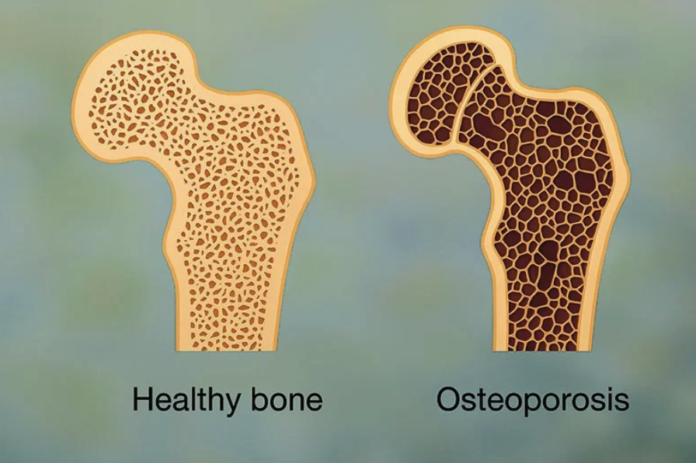
Osteoporosis and osteopenia are significant health concerns in Australia, especially among the ageing population. Osteoporosis is a chronic condition defined by low bone mineral density, which increases the risk of fracture. Osteopenia refers to bone mineral density that is lower than normal but not low enough to be classified as osteoporosis. Osteopenia can progress to osteoporosis.
Minimal trauma fractures are a major feature of osteoporosis — these are fractures that occur following minimal or no trauma. Fractures due to osteoporosis can result in chronic pain, disability, loss of independence and premature death.
Diagnosis of osteoporosis requires an assessment of bone mineral density(BMD). The most commonly used technique for this is a specialized x-ray known as a Dual energy x-ray absorptiometry(DXA) scan. Scan results are expressed as a T-score which are compared to the average T scores of young healthy adults for diagnosis . A normal T score being 1 to -1, osteopenia -1 to-2.5 and osteoporosis –2.5 and lower.
According to Australian Institute of Health and Welfare in 2022 around 853,000 Australians were estimated to be living with osteopenia and osteoporosis. However as osteoporosis has no overt symptoms, as it is often not diagnosed until a fracture occurs . It is therefor difficult to determine the true prevalence of the condition and reported prevalence is likely to be an underestimation.
Causes of Osteoporosis and Osteopenia
Risk factors associated with the development of osteoporosis include include increasing age, low vitamin D levels, low intake of calcium, smoking, excessive alcohol consumption, physical inactivity being female, family history of the condition, long term corticosteroid use, low oestrogen levels.
TREATMENT:
The treatment of osteoporosis includes both pharmacological and non pharmacological therapies. The common classes of drugs used include :
1) Bisphosphonates, which inhibit bone resorption by reducing the activity of cells that increase bone turnover.
2) Selective oestrogen receptor modulators: This class of drugs mimics the effect of oestrogen, they reduce bone turnover and maintain bone density by acting on oestrogen receptors in bone.
1) Hormone replacement therapy: Oestrogen is critical for maintaining bone density. Hormone replacement therapy helps restore Oestrogen levels in post menopausal women thus decreasing bone resorption and loss.
2) Denosumab: commonly known as prolia,is a monoclonal, antibody that acts to inhibit the formation of osteoclasts , the cells that cause bone resorption.
3) Anabolic drugs: Drugs such as Teriparatide and Abloparatide actively stimulate bone formation rather than just prevent resorption.
4) Supplements: Treatment of osteoporosis may also require supplementation of vitamin D and calcium if these are lacking, the latter of which can also be increase by dietary means,
Non Pharmacological Treatment:
Exercise: Progressive resistance training is effective in boosting bone mineral density, particularly those exercises that involve multiple muscle groups such as squats, deadlifts, and modified Olympic lifting exercises. Whilst other activities such as walking or swimming are great for general health , they have less impact on directly increasing bone mass.
Falls prevention : The consequence of a fall for a person suffering osteoporosis, can lead to serious injury and increased risk of developing complications ,including increased risk of mortality. For these individuals decreasing the likelihood of a fall is an important management strategy. Falls prevention strategies include:
1) Home modifications to identify falls and trip hazards.
2) Regular vision checks.
3) Balance training.
Osteoporosis and osteopenia pose considerable public health challenges in Australia, particularly among older adults. Continual emphasis on prevention through lifestyle modification, appropriate pharmacology, participation in resistance training, and regular monitoring is crucial for managing these conditions effectively.
At Springs Medical our dedicated medical, nursing and allied health team are well equipped to implement both preventative and treatment strategies, providing comprehensive management of osteopenia and osteoporosis.
Andrew Gallagher (Physiotherapist Springs Medical Daylesford)