

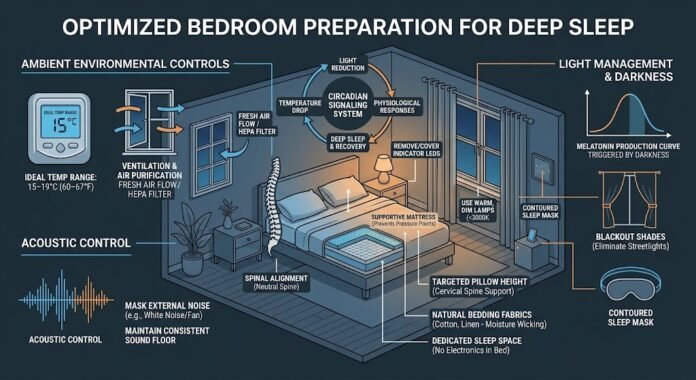
The influence of sleep in maintaining ongoing good health has been well recognised for some time now. The research informs us that good quality sleep is important to maintain cardiovascular health ,brain health , mental health and general wellbeing. There is also emerging evidence that poor sleep drives inflammatory processes which underlie many health conditions. Chronic poor quality sleep such as inability to fall asleep, waking intermittently during the night, or waking and failure to reestablish sleep are recognised by the medical profession as a significant health risk.
Previous articles in this series have referenced the concept of sleep hygiene , that is developing appropriate routines that optimize and enhance sleep quality. These include avoiding eating large meals close to bedtime, consuming sugary foods before sleep; consuming excessive stimulants during the day and into the evening such as caffeine , sugary foods , and alcohol. It is important to develop a routine in the evening as preparation for sleep such as limiting or avoiding screen time , engaging in soporific activities such as reading a book or a quiet mediation. Part of the bodies normal preparation for sleep is a slight drop in body temperature. During sleep the body’s working temperature is reduced.
The following discussion will elaborate on the role thermoregulation has in sleep biology.
Falling asleep is not linked to getting cold but rather moving heat from the centre of your body towards your skin so it can escape. Research has found that this heat loss process is a particularly strong indicator of the ease of sleep onset. Your bedroom temperature can have a significant on this process. .
YOUR BEDROOM’S THERMAL ENVIRONMENT INTERACTS WITH YOUR CORE BODY TEMPERATURE AND THE BIOLOGICAL PROCESS’S INVOLVED IN SLEEP.
So what is the best temperature for sleep? There is not one scientifically established number that suits everyone.
For older adults new real world evidence is especially interesting. Researchers monitored 80 community dwelling adults aged 65 years and over for 11000 person -nights , measuring their bedroom environment alongside sleep duration, efficiency and restlessness. Sleep was most efficient and restful when bedroom temperature was set between 20 and 25 degrees Celsius. A substantial individual variation was observed suggesting the best sleep temperature should be thought of as a personal comfort range. The study further showed that sleeping at 30 degrees Celsius overnight reduced total sleep time by around 25 minutes and sleep efficiency by 5.5 points. REM sleep was also reduced, while awake time increased.
WHY DOES BODY TEMPERATURE MATTER FOR SLEEP?
To understand why your bedroom temperature matters, it helps to understand thermoregulation, the process your body uses to control its internal temperature. Before sleep blood vessels in your hand and feet dilate allowing warm blood to reach the skin and increasing heat loss to your surroundings. This shunting of blood from the centre to the periphery is closely associated with sleep onset.
CAN A BEDROOM BE TOO HOT FOR SLEEP?
The answer particularly for older adults is yes as already discussed the optimum range for older adults is between 20- 25 C
HOW CAN YOU NATURALLY COOL YOUR BEDROOM?
If your bedroom becomes warm overnight, you do not necessarily need to make dramatic changes, improving airflow and reducing unnecessary heat can help create a more comfortable sleeping environment. Ventilation is particularly interesting because bedroom air quality and temperature can interact, with studies showing increased ventilation increased the duration of both deep and REM sleep. When outdoor conditions allow, you can encourage airflow by simply opening windows in the cooler evening or early morning. Fan’s can also be used in increase air movement ceiling fans are particularly effective in this regard.
There is a commonly held association between warmth and comfort ,which for most people extends to their bedroom. This is particularly evident in the practise of placing heaters in the bedroom and the use of electric blankets. These habits of comfort seeking through heat as research informs us are counterproductive to achieving optimal sleeping conditions and hence a good restorative night’s sleep
Andrew Gallagher physiotherapist Sprigs Medical.
Claire Taubert Psychologist Gestalt Concepts
References: Night time ambient temperature and sleep in community dwelling older adults .Science of the Total Environment Amir Baniassdi et all Vol 899 Elsevier publishing.