
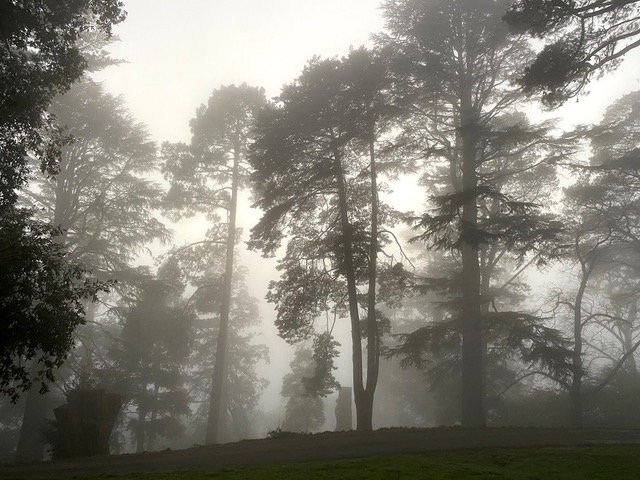
As Easter arrives in Daylesford, the landscape undergoes its annual, atmospheric shift. The vibrant, gold-drenched afternoons of late summer surrender to a softer, more somber palette. In Botanical Gardens, the early morning mists cling to the ancient elms and conifers, blurring the edges of the world. Down at the Lake, the water sits still and opaque, mirrored by a low-hanging grey sky. It is a scene that naturally invites reflection, but this year, the solace of the Victorian highlands feels less like peace and more like a heavy, collective indrawing of breath.
For many, this Easter is shadowed by a profound sense of global vertigo. The escalating conflict in the Middle East has moved beyond the realm of distant “news” to become a visceral weight on the local consciousness. We are witnessing the shattering of millions of lives in a region steeped in millennia of culture and history. The sheer scale of the displacement, the violence, and the clinical destruction of human potential is staggering. It is a crisis that feels both ancient and terrifyingly modern, a dispute where complex religious and historical threads are being cut by the blunt instrument of modern warfare.
The ripples of this instability are no longer confined to distant shores; they are surfacing in the mundane realities of daily life in our own lives. At the local petrol stations and around kitchen tables, the conversation has shifted toward the rising cost of fuel and the looming threat of global shortages. There is a palpable, nagging anxiety regarding mobility. As the holiday period begins, the simple act of planning a road trip is tinged with a new kind of hesitation—a “what if” that echoes the traumatic disruptions of the COVID-19 era.
The memory of the pandemic remains a fresh wound. The suddenness with which the world contracted, the border closures, and the enforced stillness of the lockdowns have left a residual fear of being “stranded” or having life once again “put on hold.” We find ourselves waiting for the next shoe to drop, watching the horizon for a widening disaster that feels increasingly out of our hands. This sense of powerlessness is perhaps the most corrosive element of the current moment. It breeds a peculiar kind of fatigue, where the anticipation of crisis becomes as exhausting as the crisis itself.
Underneath this anxiety many feel a simmering anger. It is difficult to witness the lack of humanity displayed by those who view war and destruction as the primary—or only—solution to complex disputes. There is a deep-seated frustration at the sight of leaders, often comfortably insulated from the physical and economic costs of their decisions, capriciously committing to paths that result in such immense human suffering. To look at the state of the world this Easter is to confront dispirited uncertainty.
However, if Easter is to mean anything—whether viewed through a secular lens of seasonal change or a spiritual lens of resurrection—it cannot be defined by anger, depression, or anxiety. To allow these emotions to become our permanent state is to concede defeat to darkness. Easter is, at its core, a moment in time designated for renewal. It represents the persistent, stubborn return of the light after the longest of nights.
Our response to global uncertainty must be a radical reaffirmation of our commitment to one another. When the world economy feels volatile and international diplomacy seems bankrupt, the importance of local community and cooperation becomes paramount. If we cannot control the geopolitical tides of the Middle East, we can control how we treat our neighbors, how we support local systems of sustainability, and how we foster a culture of dialogue over division within our own townships.
A commitment to community is the alternative to the “put on hold” mentality. By engaging in collective efforts—whether through local commerce, environmental stewardship of our parks and lakes, or simply the act of coming together to share these anxieties—we move from passive observers of disaster to active participants in our own future. Cooperation is not a naive ideal; it is necessity for navigating a world in flux. And we are fortunate that there are plenty of community opportunities in locally.
This Easter, as the mists settle over the Wombat Gardens, let us acknowledge the shadows without being consumed by them. Let the reflection of the season lead us away from the paralysis of anger and anxiety toward the clarity of purpose. The future remains unwritten, and its quality will be determined by our ability to uphold the values of humanity and community, ensuring that even in a time of great uncertainty, the light of our shared commitment to one another does not flicker out.


