
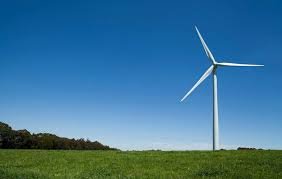
Renewable energy has been a central focus for the Daylesford Community for nearly 20 years. The local development of a community wind farm, battery and solar by Hepburn Energy is a world leading example of community energy projects. Gale and Gusto the local wind turbines are well established members of the community.
Dramatically increasing emissions leading to global warming and climate is the central force driving the transition from fossil fuel to renewable energy. Failure to reach net zero will lead to increased temperature, extreme weather events, floods and fires, with major impacts on crop failures, food security and coastal sea rise. Major economic and social disruption are likely.
But there are costs in making the transition. Large scale wind and solar has to be built. Thousands of kilometres of transmission lines have to be built. Households and industry have to electrify. Coal fired power plants have to be decommissioned.
Inevitably, there are disputes. There are concerns that Australia is only meeting its emissions targets by reducing land clearing and increasing reforestation. Actual emissions from industry, transport and energy are stubbornly high and much more is needed if they are to be reduced.
Concerns about the costs of transition have led to populists arguments that renewables are an attack on rural communities by locking up farming land and putting through transmission lines. High energy prices have been blamed on the transition and it has been argued that it is pointless for Australia to reduce emissions while others are still increasing theirs.
Counter arguments point out that the cost of climate change now exceed the cost of the energy transition. Industry and consumers are rapidly moving to electrify. Coal fired power is ageing and increasingly unreliable and there is little investor appetite for nuclear. It is already clear that renewable energy is cheaper than fossil fuel when it is implemented at scale. Compared to doing nothing, farmers and rural communities are likely to benefit by avoiding the worst effects of climate change by moving to renewables.
More broadly the world is moving on, China and the European Union are committed to the energy transition. China has become the dominant player in the development of renewables through solar, wind and electrification of transport and manufacturing. While it continues to massively increase its energy consumption, it has dramatically increased its installation of renewables at a rate far exceeding fossil fuels. European regulations and requirements make it difficult to access their markets without a commitment to reducing emissions. Increasingly electrification and renewables will become unavoidable for Australian agricultural, manufacturing and service industries.
Locally, there continues to be a mixed response to renewables. On the one hand consumers are electrifying. Solar panels are going up, electric vehicles are being purchased. Gas is being decommissioned. There is strong support for local renewable projects like those initiated by Hepburn Energy. On the other hand, as the signs on the drive from Daylesford to Ballarat point out, there are protests and opposition to the high voltage Western Renewables Link being built by Ausnet.
These issues will be the subject of the next Daylesford Conversation. Join Dr Bruce Mountain and Taryn Lane in conversation about the opportunities and challenges.
Dr Mountain is the inaugural Director of the Victoria Energy Policy Centre. He is a well-known Australian energy economist whose research and advisory work has focussed on the economic regulation of network monopolies, the analysis of retail energy markets, and the design of emission reduction and renewable energy policies. Bruce has been a long-standing advisor to governments, regulators, market participants and interest groups in Australia and internationally. His PhD from Victoria University was on the political economy of energy regulation in Australia, and he has a Bachelor and a Masters degree in Electrical Engineering from the University of Cape Town and is qualified as a Chartered Management Accountant in England.
Taryn Lane has worked at Hepburn Energy for over 15 years – located in Leonards Hill, it is a 100% community-owned energy cooperative. Hepburn Energy has recently added a battery to their energy park, they own and operate a local EV charging network in the Shire and undertake electrification support programs for the community to help them take action on climate change.
The conversation will be followed by drinks and nibbles and an opportunity to meet fellow attendees and Bruce and Taryn.
This is a free event, but registration is essential to get a seat and to help planning for the refreshments. Please register here.
DATE
Thursday 16 April 2026 6:00 PM – 8:00 PM (UTC+10)
LOCATION
Main Road
113 Main Road, Hepburn Springs Vic 3460