At its regular meeting this month, Council voted to overrule the recommendation of council officers to permanently close Wheelers Bridge and instead seek additional funding from the State Government to repair and reopen the bridge.
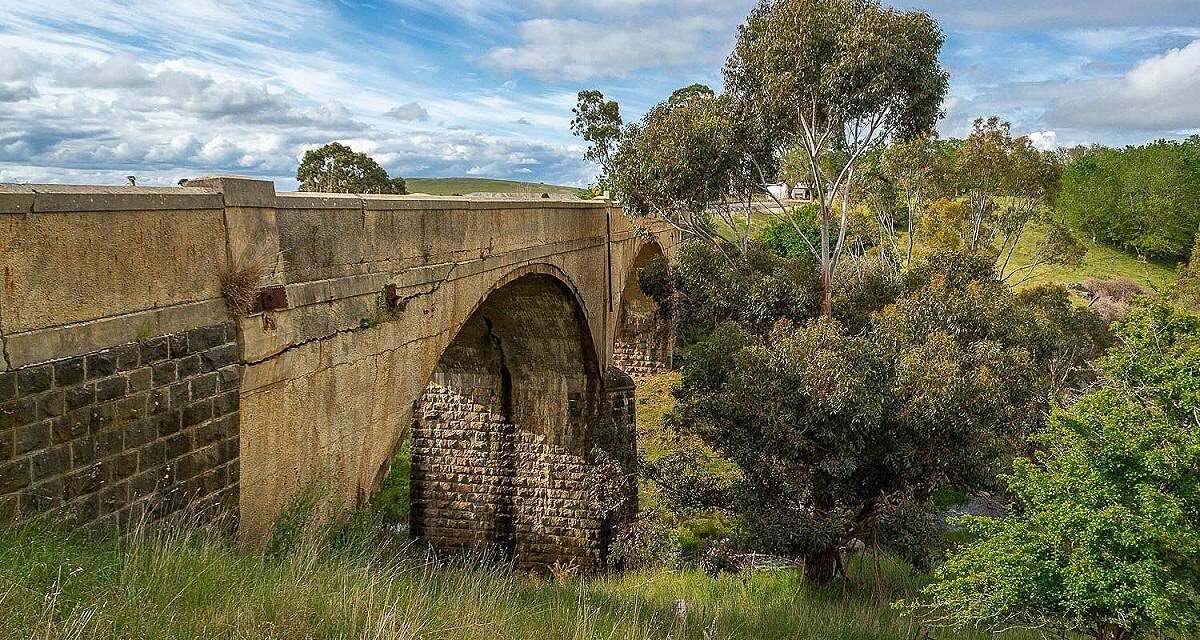
The bridge has been closed since an independent engineering review in December 2025 deemed the structure “immediately dangerous”.
The 125-year-old bridge has deteriorated in recent years. A 15-tonne load limit was imposed in 2013 following condition assessments. In 2018 the bridge was reduced to a single lane with a 40 km/h speed limit, and sensors were installed to monitor structural movement.
The closure primarily affects 11 properties on Creswick–Lawrence Road. Heavy vehicles travelling from one side of the bridge to the other now face a detour of about 13 km, while lighter vehicles require a detour of around 9 km. When vehicle traffic across the bridge was last measured in 2021, an average of 77 vehicles per day used the crossing.
Council had previously pursued a renewal project retaining the heritage structure. Initial construction estimates were around $3.6–4 million, supported by a $2.78 million federal grant under the Bridges Renewal Program on an 80:20 funding split. Council also allocated $507,453 for road approach works.
However, a 2025 Expression of Interest process revealed construction estimates up to 100 per cent above the available budget. Total project costs, including contingencies and project management, are now estimated in the order of $9–10 million — roughly equivalent to a decade of Council’s projected bridge renewal spending.
Cr Don Henderson introduced a motion contrary to the officer recommendation that the bridge be permanently closed. Instead, he proposed that Council seek additional funding from the State Government, direct officers to advocate for further support, and redirect the planned $507,000 for associated roadworks into the Grants Reserve Fund as a future co-contribution towards bridge restoration works.
Cr Henderson argued that detours created inconvenience for local residents and imposed additional time and costs on the haulage of agricultural products to primary markets in Geelong. However, no estimate was provided of the additional costs or travel time associated with the alternate routing. Nor did he indicate why heavy vehicles would prefer Creswick–Lawrence Road over larger and better-maintained alternatives such as Daylesford–Clunes Road to the north-east or Creswick Road to the south-west.
Cr Henderson also noted the importance of the bridge for emergency vehicle access, particularly during fires. However, according to Google Maps travel times, vehicles from the nearest CFA brigade at Kingston could reach the north side of the bridge in approximately 10 minutes, or the south side in about 11 minutes via existing routes.
Cr Brian Hood spoke against the motion, stating that Council simply did not have the resources to commit to another multi-million-dollar project. While acknowledging the historic value of the bridge, he said the numbers did not justify the expenditure.
“We need to face up to the fact that we don’t have the resources to do this,” he said. “Council cannot afford it — the numbers simply do not justify it.”
He suggested that the $507,000 proposed for the Grants Reserve Fund, which could remain tied up awaiting uncertain future commitments from state or federal governments, would be better spent on higher-priority road projects.
The motion was carried 5-1 with Crs Drylie, Hockey, Henderson, Cornish and Clark voting in favour and Cr Hood voting against. Cr Hewitt was absent from the meeting.