
Lesley Hewitt
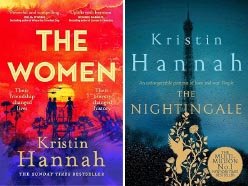
Each year on 8th March, International Women’s Day recognises the achievements and often overlooked contributions of women. The historical novels of Kristin Hannah frequently echo this theme by focusing on women whose wartime experiences have rarely been central to traditional historical narratives. Two of her most widely read works, The Women (2024) and The Nightingale (2015) explore the lives of women during major twentieth-century conflicts and examine how courage and sacrifice can take many different forms.
The Women is set during the Vietnam War and follows Frances “Frankie” McGrath, a young American nursing student who volunteers for military service. Raised in a patriotic family that reveres military heroism, Frankie deploys to Vietnam expecting honour and purpose but instead encounters the brutal reality of frontline medicine. A strength of the book is the vivid depictions of the chaos of field hospitals and the emotional toll on nurses caring for severely wounded soldiers.
The novel’s most powerful themes emerge when Frankie returns home. Rather than receiving recognition as a veteran, she discovers that many Americans refuse to acknowledge that women served in Vietnam at all. Through Frankie’s struggles with trauma and social indifference, Hannah highlights the historical invisibility of female veterans and challenges the narrow way war service has often been remembered.
In contrast, The Nightingale takes place during the World War II in Nazi-occupied France. The story centres on two sisters, Vianne Mauriac and Isabelle Rossignol, whose wartime paths diverge dramatically. Vianne remains at home protecting her daughter while coping with a German officer billeted in her house, representing the quiet resilience required for survival under occupation. Isabelle, rebellious and determined, joins the French Resistance and helps Allied airmen escape across the Pyrenees.
Through these contrasting stories, Hannah illustrates that resistance can take many forms, from acts of covert defiance to the endurance required to keep families safe.
Hannah undertakes considerable background research and includes, in fictionalised form, incidents and events that have occurred. Like her description of the work of the medical staff in field hospitals in Vietnam, her telling of Isabelle’s interrogation by the Gestapo is powerful and gut wrenching.
Hannah uses convenient plot lines that at times challenge credibility, relying as she does on dramatic plot turns and clearly defined moral contrasts. However, her accessible style does mean that complex historical experiences reach a broad audience who might otherwise not know of these events.
Taken together, The Women and The Nightingale reflect Hannah’s ongoing effort to bring women’s wartime stories into the centre of historical fiction, an aim closely aligned with the spirit of International Women’s Day.
Both books are readily available online, in bookshops and with discount book sellers in addition to Hepburn Shire libraries.
The books were reviewed on the Hepburn Community Radio’s Second Tuesday Book review on 10th February, and the podcast is available at this link.
Lesley Hewitt is a Daylesford resident who presents the Second Tuesday Book Review on HEPFM.