
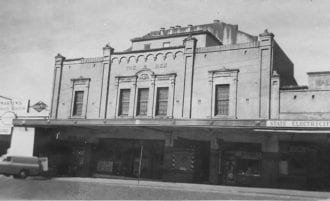
Cinema in Daylesford is about to make a comeback at its home in the Rex thanks to the efforts of a dedicated community campaign over an extended period of time. The rise of the Phoenix is the another important step in the history of cinema in Daylesford.
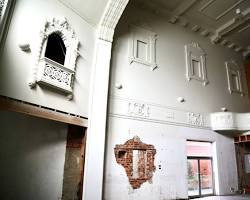
The Rex Theatre opened its doors on Boxing Day in 1929. The Rex site was previously occupied by Stubbs Commercial hotel and was possibly a former Cobb and Co staging post. The Rex was designed by the renowned architecture firm Bohringer, Taylor and Johnson—the same team behind Melbourne’s iconic Forum Theatre—it was a sophisticated “Spanish colonial theatrical” venue that seated 1000 patrons. It was one of the first theatres outside of major cities to feature CinemaScope technology in the mid-1950s. It remains one of the few Spanish colonial style cinemas in Australia and the history of cinema in Daylesford is intrinsically linked to this grand, Spanish colonial-style building on Vincent Street. Over the decades, it has served as a cultural anchor, a shopping arcade, and it has been the subject of significant community advocacy.
The Rise and Fall of the Rex Theatre
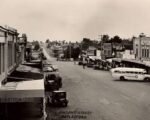
Before the grand opening of The Rex in 1929, cinema in Daylesford was a nomadic, makeshift affair. It relied on the ingenuity of local promoters and the availability of multipurpose community halls. The exhibitors would move between small towns on a circuit, hiring local halls for a night or two. Much of the early cinema was at the old Drill Hall on Bridport Street, where the Fire Station is today. This was the primary venue for weekly and later twice-weekly screenings before the town had a dedicated theatre.
The Town Hall also screened cinema before the Rex. But projection was often set up on temporary scaffolding and the audience sat on basic timber seating. Nevertheless, it established the habit of going to the pictures as a social anchor during the post WW1 era.
Early on a number of people were instrumental in bringing cinema to Daylesford. Aubrey Moulden Christie was the driving force behind the initial establishment of the Rex. Long before he invested the massive sum of £10,000 to build the Spanish colonial-style Rex, he was the primary exhibitor managing the screenings at the Drill Hall. He essentially “built” the audience in Daylesford before he built the building.
Jack Jackson was another fascinating and important local figure in the development of local cinema. He was a projectionist, photographer, and amateur filmmaker. By 1912, he had purchased a hand-cranked camera and was filming local Daylesford life. He famously partnered in the “Star Theatre,” which hosted regular movie nights inside the Daylesford Town Hall.
The Scale of the 1929 Shift
The move to The Rex was an enormous gamble. When Christie bought the hotel site on Vincent Street to build the theatre, he had to secure over £10,000—a small fortune for a country town at the time. The transition was spurred by the need to:
- Enhance the Experience: The public wanted more than just a flickering image in a hall; they wanted “theatrical” glamour.
- Overcome Challenges: The building process faced significant setbacks, including structural cave-ins caused by the region’s old mining shafts under the site, which required extensive, costly foundation work.
It is worth noting that the “Spanish colonial” design was intended to transport locals out of their daily lives—something the “temporary” hall screenings could never achieve.
The Rex became a central feature in the life of the town. However, the theatre’s prominence began to fade with the advent of television in the early 1960s, eventually closing its doors as a commercial cinema in 1963.
Community Persistence and The Rex Hub
Following its closure as a cinema, the building underwent various transformations, including time as a budget retail space. In 2002-3, Jules McDonald, then the Youth Development Officer with the the Hepburn Shire, facilitated a group of young people to do some creative thinking about what they like to see developed in the area. An ambitious plan for a cinema at the Rex emerged with a social enterprise cafe, hospitality training, a bowling alley and shops. Led by Michael Huggard, plans were drawn up but the group was unsuccessful at the time. Although, sadly, Michael Huggard died, a number of the young people went on to have interesting roles in creative arts, including film making. Huggard’s contribution became the ‘North Star’ for many who went on to advocate for a rebirth of Daylesford Cinema at The Rex.
When the Bargain Basement shop finally closed the new owners developed an arcade of shops including the Mill Market for a time. In 2013 a community cinema group was established and became one of the arcade tenants. They ran weekly successful screenings with a loyal group of volunteers, progressively building community support for its activities, raising $140,000 to fit out a 99 seat flat floor theatre. The theatre was a success with the community, but the arcade itself was a poorly designed commercial failure.
In 2016, the Hepburn Shire Council purchased the building with ambitious plans to convert it into the “Hepburn Hub at The Rex,” a multi-purpose community facility. Unfortunately, the project faced major delays and budget blow-outs, remaining largely abandoned for several years and leaving the town without its long-cherished cinema. During this period, the local community, led by the Daylesford Cinema Group, campaigned tirelessly to restore the theatre, even operating temporary cinema setups in other local venues.
Phoenix @ The Rex
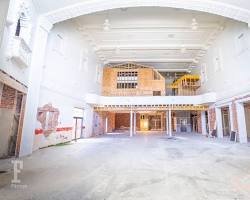
In 2022, the Rex building was sold to the Comelli and Bromley families, local residents who recognized the building’s historical and cultural significance. This sale sparked a new chapter for the venue, officially branded as the Phoenix @ The Rex. Two decades after the initial plans for a new cinema at the Rex, the Daylesford Cinema Group, raised the funds and organised support for a spectacular, state of the art, tiered theatre to be opened shortly. The project represents an example of dedicated and persistent, community-led organisation and advocacy to revive cinema in Daylesford.
We acknowledge the contribution of Jules McDonald in providing comments and information for this article


