

Winter is a time of renewal.
Whilst some of may be dreading the onset of a cold, wet and frosty winter, this season is critical for the health of plants.
Deciduous plants require a cold period to perform well. They are able to conserve energy to be used in the production of leaves and vibrant blooms when the warm weather returns. Cooler temperatures and more rainfall allow other plants to recover from the stress of summer heat and build strong and deep root systems. And at this time there are fewer pests and diseases to attack your plants.
PLANT OF THE SEASON
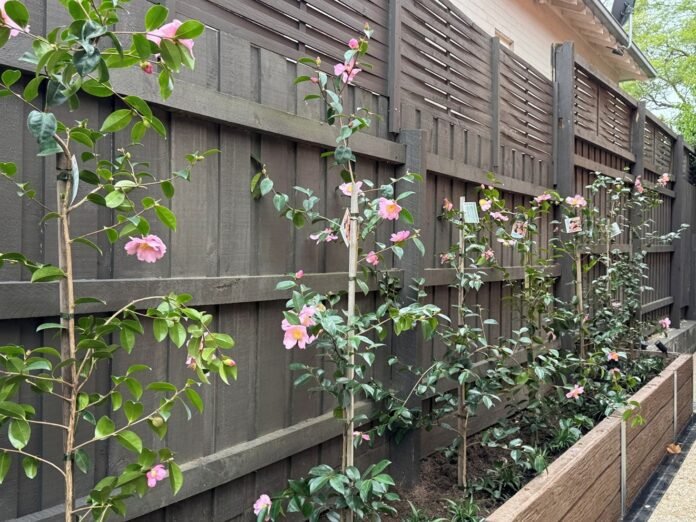
Camellias which flower in early winter are looking great now. With large pink single flowers, a row of Camellia ‘Plantation Pink’ provides the perfect outlook from the lounge room.
Camellias have beautiful flowers in white, pink and red including combinations of these colours. They are a useful landscaping plant providing glossy leaves and attractive flowers. Camellia japonica is ideal for hedging in shade or semi-shade. Camellia sasanqua can usually handle more sun as long as they get enough water and have some protection from the elements. Upright C. sasanqua varieties can be espaliered on cables for narrow spaces.
They can be planted now before it gets too cold or in early spring.
GARDENING FUN
Despite the benefits of winter, some plants need protection from the frost. Cover tender plants with cloth such as hessian at night, when frost is expected.
Winter chill is the perfect time to prune dormant shrubs and climbers such as roses, Wisteria and ornamental and fruiting grape vines. Prune roses after the worst of the frost has finished. Winter flowering shrubs should be pruned after flowering.
Many plants prefer a cold start to their growing season and can be planted now.
Trees and Shrubs: Winter is the best time to plant deciduous trees and shrubs. Save money by purchasing bare-rooted deciduous trees. Also plant Daphne Odora small with its sweet perfume and waxy pink and white flowers, and Lavender with its beautiful aroma.
Australian Natives: Frost tolerant species of Correa which is a tough shrub which can cope with some shade, Grevillea with striking flowers which attract the birds, Banksia with attractive cylindrical flowers for local wildlife, Wattle (Acacia species) for easy care and provide a delightful splash of yellow in late winter, Kangaroo Paw (Anigozanthos species) a bold and colourful feature plant and Happy Wanderer (Hardenbergia violacea) a fast growing climber with pea-shaped flowers can all be planted now. And don’t forget the smaller seed eating birds; plant some Lomandra and Dianella to provide food and shelter.
Shade loving perennials: Hellebores long flowering and perfect for under deciduous trees and Cyclamens colourful and excellent for pots.
Annuals: Many annuals can be planted now to provide bursts of colour on the coldest days. Consider Pansies (Viola species), Primulas and Calendulas.
Edibles: Brassicas such as Cauliflower and Broccoli, asparagus and rhubarb crowns, spinach, onion, peas, broad beans, and perennial herbs can be planted during winter.
Improve your heavy soil by digging in some compost and leaf matter. Avoid working the soil when it is very wet, to prevent damaging the soil structure.
GARDEN DESIGN
When deciduous trees are bare and herbaceous perennials have died down, the overall shape and the structure of the garden becomes clear. So, when the weather sends you inside, seize the opportunity to create a plan to take your garden to the next level.
The rear garden should be a hard-working space. If yours is not providing you with what you need, consider the following design ideas.
For a major renovation, draw the site on graph paper using a scale of 1:100. Add the house, internal fences, utilities, outbuildings, built structures and plants you wish to retain. Make two copies. On one copy add in areas of sun and shade and problems such as damp patches. On the second copy draw the areas you want in your future garden.
For steep blocks, add rocks or retaining walls and steps to make the garden people friendly and improve drainage as needed. Include all the paths you need to easily move around plus paths required to maintain the garden.
Cover fences with hedges, trees, shrubs or climbers to give the garden a green border. Add further screening plants if you have ugly views or you prefer an enclosed and private space.
Add an entertaining area, not too big and not too small. Cover the area with a pergola, sail, an umbrella or use a medium size deciduous tree for shade. Create a flat surface using crushed rock or pave the area. Provide some extra seating within the garden to enjoy a cup of something, catch up on reading or just to sit and enjoy your efforts.
Don’t forget to allow space for all your utilities, plus a breezy spot for a clothesline. Include a compost bin plus cages for composting leaves if space allows.
A wonderful addition is to create a dedicated play space for children. If play equipment is included make sure you follow safety guidelines and add soft fall underneath. Provide some shade, an area with plenty of seating using timber or flat rocks to surround the area with tough native plants.
For a productive garden choose a sunny spot. Consider what style of raised beds you prefer and whether you want wicking beds. Add fruit trees behind the beds and flowering plants nearby to bring in beneficial insects. If space is limited, choose from the many dwarf fruiting trees which are available.
QUOTE
“Instead of bemoaning the cold weather, I’ll take this time to plan for next year’s garden, dream of future projects, and be thankful for the rest that winter brings.”— Garden Chick
Enjoy Winter in the Garden.
Diane Beddison is a frequent visitor to Daylesford and the Principal of Beddison Garden Designswww.beddisongardendesigns.com