
Crowds jostling to fill the public gallery as a verdict is delivered. Media scrums as reporters vie for the best position or chase a defendant down the street. Furtive sightseers travelling to the scene of a terrible crime.
Scenes like this are familiar to us from recent high-profile murder cases in Victoria. Given catchy monikers by the media, like the ‘mushroom murders’ or ‘High Country campers’, our appetite for such crimes seems insatiable. For instance, the ABC’s daily recap of the Erin Patterson trial was downloaded more than 3 million times in a single month. Seven documentary teams were reportedly in Morwell to cover the case. People with no connection to the crime queued for hours in the cold to secure their place in the public gallery.
From rolling news coverage and endless podcasts to books and documentaries rushed into production, our obsession with true crime might seem like a recent phenomenon. But there’s nothing new about our appetite for crime news – or our willingness to treat serious crimes like murder as a form of entertainment. For centuries, we’ve been fascinated by true crime. And a notorious Daylesford case offers intriguing insights into what’s changed (and what hasn’t) when it comes to our crime obsession.
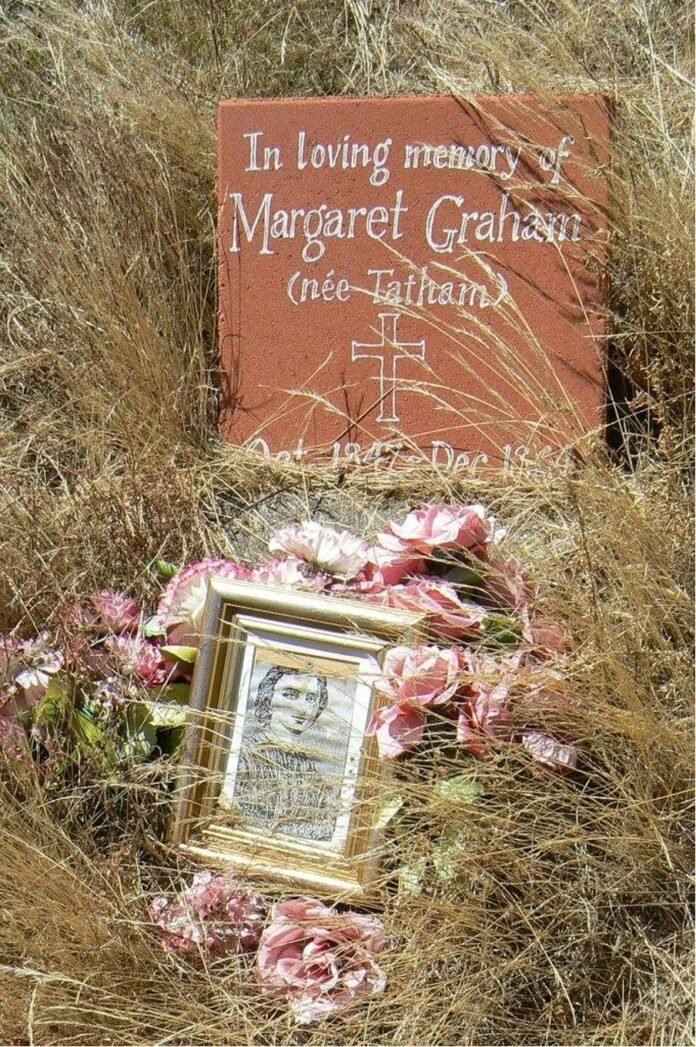
The 1864 murder of Margaret Graham was the most infamous case of its day, considered a ‘sensation’ by the press and consumed with relish by the colonial public. Three days after Christmas, seventeen-year-old Margaret Graham was found murdered in her bed. Her throat had been cut and, as well as indications of sexual assault, there were signs that Margaret had fought desperately against her attacker.
The case instantly captured the public imagination: Margaret was a sympathetic victim and, because the crime was not resolved quickly, the investigation and trial played out in the press like a fictional thriller. Even when a man was convicted and hanged for the killing, doubts over his guilt ensured the mystery of ‘the Daylesford murder’ lingered long in the public memory.
Just as we can now access true crime content in a variety of forms, the colonial public had multiple ways to consume – or even directly engage with – the Margaret Graham case. However, some of these activities might today strike us as strange or even disturbing.
While it is common for modern true crime tourists to snap photos of a notorious location, we’d likely recoil from the idea of poking around the bloodied bedsheets of a murder victim – as occurred following Margaret’s death. The practice of taking death masks from executed criminals and turning them into gruesome waxworks reenacting a crime has also fallen out of favour.
Yet scenes such as locals crowding into Daylesford’s courthouse for a glimpse of the main suspect, or a pamphlet account of the murder being rushed into print, remain familiar to us today. As cases like the ‘mushroom murders’ attest, sensational trials are just as likely to be besieged by spectators in 2026 as they were in 1865, and the tradition of rushing true crime texts into print (or celluloid) continues to flourish.
Some of the forms have changed; we’ve exchanged pamphlets for podcasts, and news coverage might take the form of a live blog rather than hastily telegraphed trial updates. But our obsession with true crime – what the colonial press disapprovingly termed ‘morbid curiosity’ – remains as strong as ever.
Join Dr Paige Mahoney at the next Daylesford Conversation on 20 August to learn more.
Dr Paige Mahoney is a historian of colonial Australian crime, with a particular focus on how crime was covered by the press and experienced by the public. Her previous research has explored the complex intersections between history and fiction, gender and memory, and regional and national identities. Paige is also a higher education researcher at Deakin University’s Centre for Research in Assessment and Digital Learning.
This is a free event, registration essential due to limited numbers.