
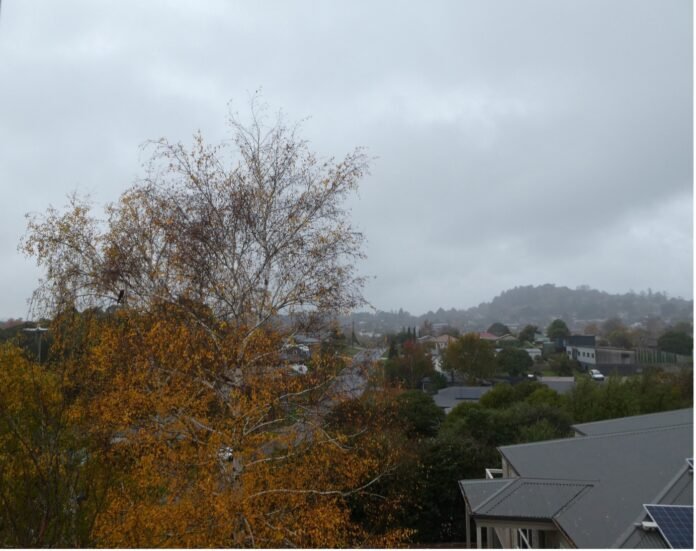
After some nice Autumn weather it looks like Wintry conditions are now settling in. It is opportune time to make sure your heating options are working well and extra layers of warm clothing have been exchanged for the lighter ones.
During May we had some mild, pleasant weather mixed in with some cooler and wetter conditions. Total rainfall recorded by the Bureau of Meteorology was very close to the long-term average of 87.2mm. Rainfall can vary across Daylesford, Hepburn Springs and surrounds. My weather station recorded just over 100mm for the month.
For the first four months this year the Bureau has recorded 315mm which compares well with the long-term average of 287mm. However, the Bureau continues to forecast drier than normal conditions for the coming four months. Their forecasting is that for June the chances are that rainfall is likely to be close to normal. July through to September are expected to be drier with chances of drier, El Nino conditions developing.
The Bureau advises that all models that they utilise forecast that the Pacific Ocean sub-surface waters are warming and will continue to warm. This reinforces the drier expectations.
With the higher costs of heating using gas or electricity it is a good time to review how you warm your home. There are various Government incentives and requirements that influence what you might do or are required to do whether you build or need to replace certain equipment such as gas hot water services. There are also many simple, less expensive things householders can do to improve heating efficiency.
Hepburn Energy developed Australia’s first Community owned wind farm at Leonards Hill more than a decade ago and is now working on other renewable energy initiatives. They can provide advice and information on solar systems, homes batteries, switching from gas and cleaner electric appliances. If you are thinking about your options it is worth contacting them. Their web site provides information and contact details: www.hepburnenergy.coop
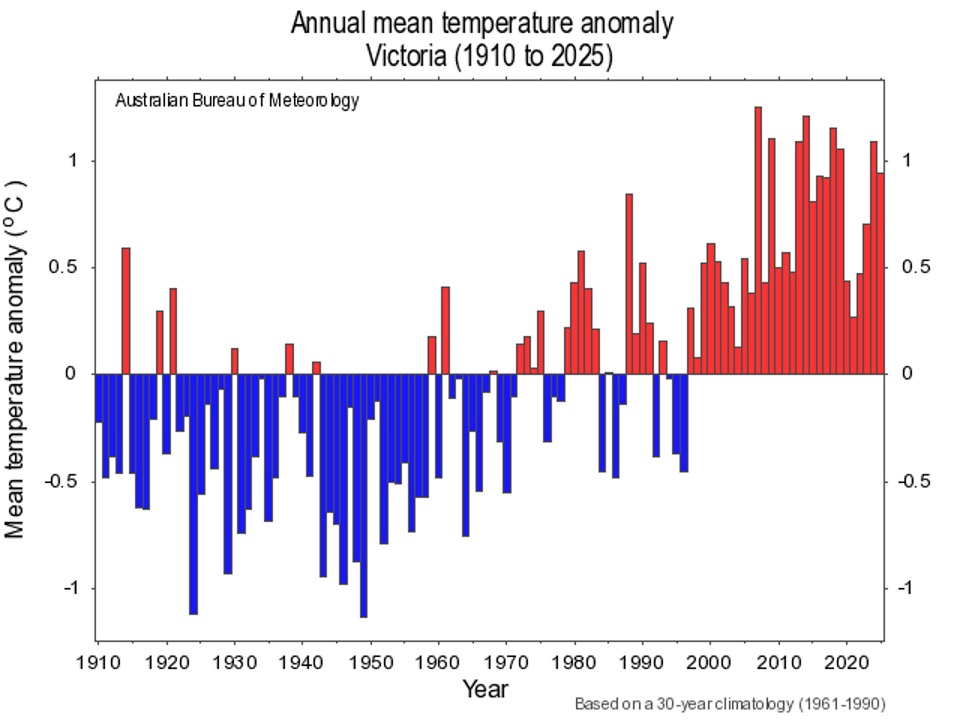
The Bureau web site provides lots of recent and historical information on topics such as temperatures and rainfalls. Their graph below shows how mean temperatures have varied since 1910. It shows a clear warming trend as mean temperatures have gradually increased. This can be through a number of effects as it does not have to be higher Summer temperatures.
In our area we have had fewer frosts in recent years and less snowfalls as temperatures generally have not fallen as low as many will remember in the past. A friend recently mentioned that they have not seen any snow in Korweinguboora for the past three years, an unusual situation as the cold weather from the south usually drops snow as it hits the Great Diving Range there.