Morgan Williams
A couple of years ago I asked a friend if they were going to put an artwork into a group show we were having at Radius, after all it had a few prizes. Their rather turse response was “No, I’m sick of having my art judged by others!”.
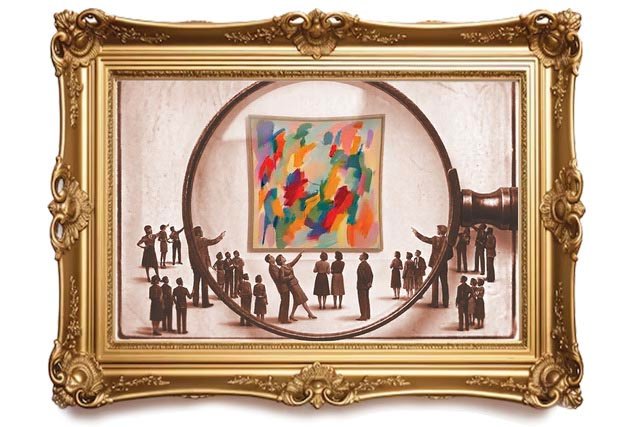
As artists and creatives being critiqued can feel harsh. Our work can be deeply personal or reflect back to the world the things people don’t want to see, hear, feel or acknowledge. The aesthetic might not appeal to everyone. It might be misunderstood, laughed at or simply deemed not ‘good’. Unfinished, unresolved, unusual, unsettling, underdone are all words I’ve heard at the gallery, especially when people think nobody is listening! Of course, comments aren’t always negative. Fantastic, amazing, beautiful, powerful, resonant, best ever get bandied about too. As with all things people tend to have opinions, usually lots of them, and especially in regard to art. In fact the mere act of placing an artwork into a gallery is pretty much inviting the world to give opinions. Perhaps one of the skills an artist needs is to be able to accept this tension, that not all art will get the intended responses and that’s ok.
I’ve mentioned here before the first critique I received at kindergarten was “Morgan it’s time to stop making a mess now, paint something real, what about a house or a tree?”. My abstract expressionism was not appreciated by Ms Smedley and my 5 year old response was to run outside to play immediately.
As a teacher one of my roles is to critique the creative work of others. Even with briefs and learning outcomes and expectations clearly defined in a rubric it can be an incredibly difficult task. We request creatives tell stories, build narrative visuals, trigger emotional responses, reference or acknowledge others and also be unique, clever and insightful. Are these all impossible tasks to achieve every time all at once?
The frameworks for critique are many and varied. In fact there’s so many trying to agree on one method is nigh impossible. Starting with self-critique can be good. Our inner critic can be the harshest of all though, it can at times even cause paralysis! An internal dialogue helps us build resilience though, also formulate meaning, and in turn create a structure for communicating feedback for others too. One of my favourite methods is to let an artwork take me by surprise. If you’ve just created something perhaps you don’t see it clearly anymore. By placing it in an unexpected place you can see it a fresh. Try and forget it’s there. On top of the fridge, in the bathroom etc. Hiding it for a few days can also help. Upside down can be fun & insightful too! Capture those initial responses, it’s personal feedback gold.
Then there’s group, peer to peer feedback. I do this with students a lot. Again it’s best to begin with a framework. At the moment I use the words Safe, Aligned, Risky. We place work under these headings and then discuss the placement together. Breaking all the visual elements down into the simplest form can be good. Colour, texture, tones. Where does the eye lead? How do we feel observing? If we removed one thing what might that be? Not all questions need an answer. A good critique is slow. Measured. Insightful. Reflective. Supportive.
And sometimes we simply don’t care what others think. The art and creative output or expression might be for ourselves alone. Hidden in journal pages, sketch books, audio recordings, saved in digital folders and note files never to see the light of day. After all it comes down to intent. Perhaps the creation is to beautify someone’s home, in which case all homes are different so it’s not for everyone anyway! It might be a creation or statement to question a belief, or part of a personal narrative and free expression that may be shared, or not. Perhaps it’s all these things and more!
Keep creating people. And if critique and feedback is your thing too I love a chat about art in all forms and all mediums. Actually I think a ‘Critique Club’ might be brewing folks so stay tuned!
Morgan Williams is the co-director with Kim Percy of Radius Art Space. His art practice spans a 30 year period and explores a diverse range of mediums and topics.