
Lesley Hewitt
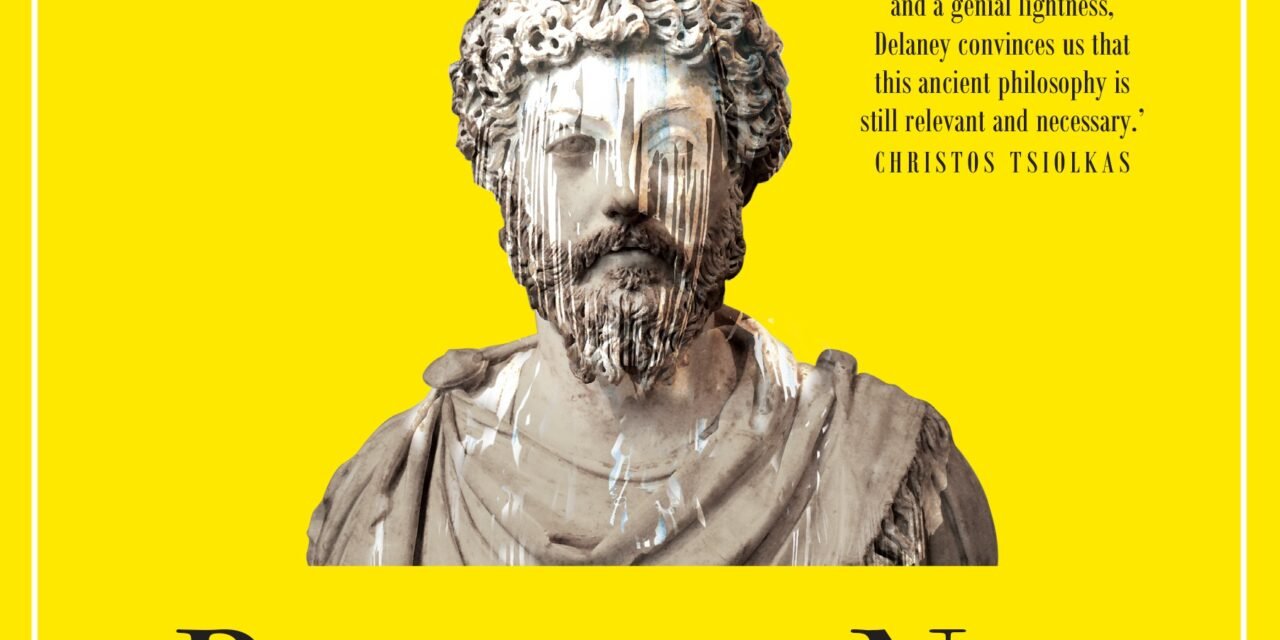
Self-help is not a category that I usually read. For me, the books tend to sit somewhere between overblown promise and often desperate optimism. But in a year that has been marked by global unease including wars, concerns about rising costs, our fraying social civility and natural disasters, a recommendation from a friend encouraged me to read Reasons Not to Worry by Brigid Delaney. It was worth it.
Delaney, who is better known for co-creating the Netflix series Wellmania, embarked on a year-long experiment living according to the teachings of the Stoics. Not the caricature of stoicism that as we generally understand it – that of tight-lipped endurance and emotional suppression, but the older, sharper philosophy of Marcus Aurelius, Epictetus and Seneca.
The questions she explores are familiar. What does it mean to be a good person? Why do we allow things beyond our control to hijack our emotional lives? And (particularly relevant in community Facebook groups everywhere) how exactly are we meant to manage anger?
What makes this book work is its tone. It is practical without being preachy, funny without being flippant, and grounded enough to make ancient philosophy feel less like a university elective and more like something you might try between weekly domestic tasks or council meetings. Delaney tests whether ancient Stoic wisdom has any traction in our modern life, where the crises are both global and intensely personal including loss, fear of missing out, and that persistent sense that everything is slightly unravelling.
One of the book’s highlights is its rescue of “stoicism” from its modern misuse. Rather than advocating emotional repression, the Stoics aimed to reduce unnecessary suffering. The goal was not numbness, but clarity, an acceptance of our mortality and the limits of our control. As Marcus Aurelius reminds us centuries ago, death is not a distant abstraction but a constant companion. Something that as a society we tend to deny.
From this flows the central Stoic discipline – to focus only on what you can control. You can control your character, your responses and your actions to events and the way you treat others. Everything else is outside your control. It is a simple idea, and one that cuts through much of the noise we generate for ourselves. The familiar cry of “why me?” often in the face of illness or misfortune, is challenged. The Stoics would argue “well why not you?” Difficulty is not personal, it is universal. Experienced by us all at some time. It’s how we manage the difficulties that we face that is important, not the difficulty itself.
Delaney also introduces a new concept to me – that of negative visualisation. It’s where you imagine loss, illness or failure not as a negative but to prepare you for the inevitable difficulty. The Stoics believe that this then enables both a sense of gratitude, but also a focus on living in the present. It’s the opposite of the positive visualisation often described by elite athletes when talking about their successes. It seems a counter-intuitive point – that instead of increasing one’s despair and suffering negative visualisation can lead to feelings of gratitude and the development of resilience.
Much of this may sound like common sense, the sort of wisdom that may have been handed down to you by caring and sensible parents. But anchored in the authority of ancient philosophy, it carries more weight. Since reading it, I’ve found the ideas unexpectedly useful when confronted with illness and the occasional bout of local hostility. Not transformative but steadying.
This is not a book that promises to fix your life. Delaney is too honest for that. But if you are tired, overwhelmed, or quietly anxious, it offers something more realistic: a way to stand a little more firmly amid the chaos. And that, these days, is no small thing.
Reasons Not to Worry was the subject of discussion on Hepburn Radio’s March book review. The podcast can be found at


