Patrice O’Shea
Entry into the Gardens is always part surprise; part inspiration. The towering trees that sit iconically above the town become the canopy of green, cool and magic that are the very unusual legacy of early Shire councillors, local philanthropists, a 19th century scientist and any number of local gardeners. The decision in the late 1850s to take the notable volcanic hill overlooking Daylesford and make it a place of public enjoyment and focused horticulture, has provided the town and our visitors with a unique collection of often rare, mature trees and cool climate plants in a remarkable setting which now constitutes a site of national and even international recognition.
The significance of our Botanic Gardens has been recognised by the Victorian Heritage Council “as a rare example of a botanic garden spectacularly sited on an extinct volcanic cone which allows a panoramic view, aided by the 1938 Pioneers’ Memorial Tower, as well as vistas within and out of the gardens and from the township to the gardens.” It also refers to it as “the most prominent local landmark” of the town. Its heritage registration (H2022) also lists the large number of rare conifers, the significance of which makes it a notable botanic destination. Its historical significance is also underlined by the remaining elements of Taylor and Sangster’s grand Victorian design that exist in the broad east-west path, the lawns and specimen trees and, above all, the Fernery and Rustic Cascade. These take the significance of the site to an even higher level. As a registered Heritage Site, there are statuary limits on what can be done to the Gardens without official permission from Heritage Victoria.
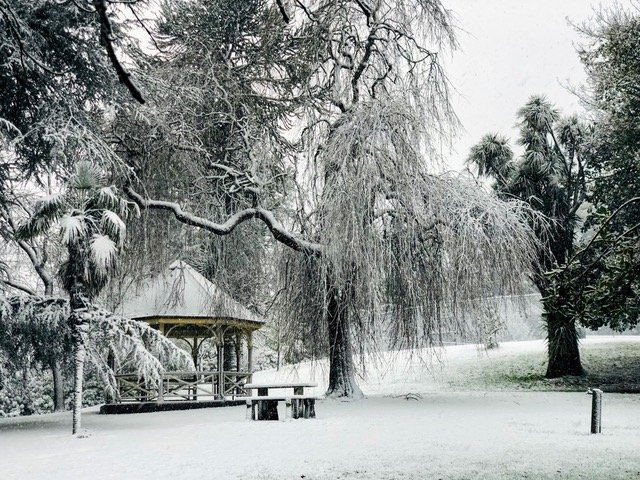
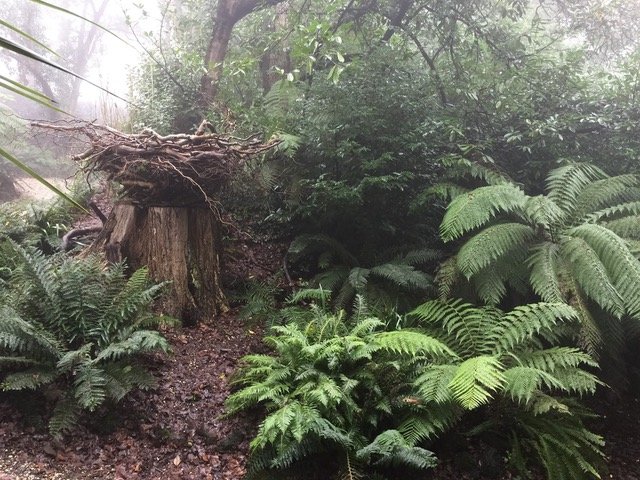
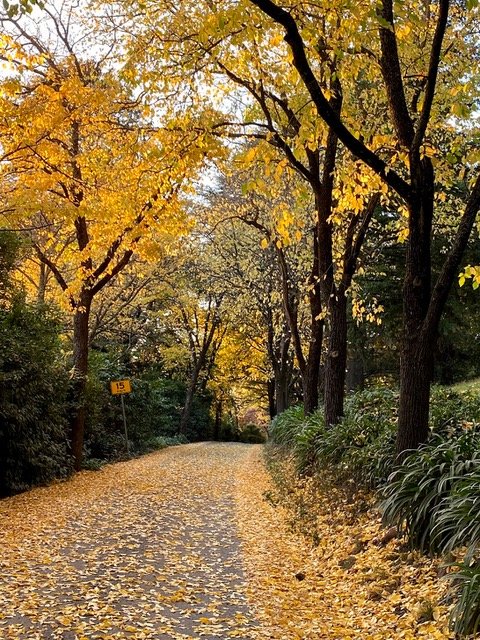
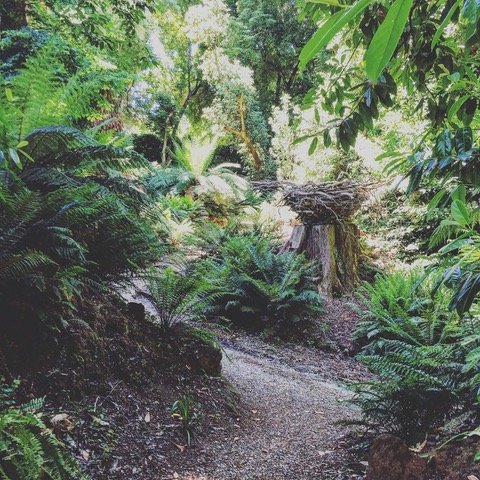
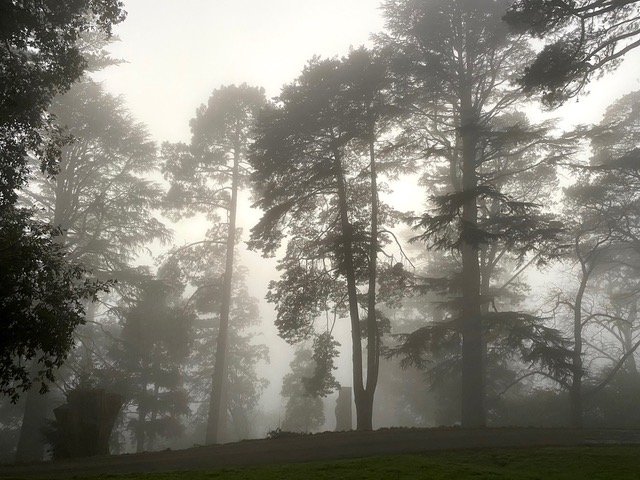
Public gardens as we know them date from the 1840s in the UK. That Daylesford began the major development of our Gardens in 1863 is indicative of the foresight of the early Council. It was looking to provide the community with a place of peaceful relaxation, botanic education and sheer beauty. And our community still continues to enjoy Wombat Hill in exactly that way. Local people walk, picnic, reflect, create and volunteer in an environment that is unique. It is a place that attracts young families, gardeners, those seeking the gentle outdoors and strolling dog owners. The café and the Tower enhance the visitor experience too.
The long list of officially specified significant trees were contributions from Baron Sir Ferdinand von Mueller, WE Stanbridge, a wide variety of local community members, then and now, and more recently, the Friends of the Gardens.
Over the years, complementing the important pinetum and collection of other European trees, the Gardens have also developed a widely visited and much appreciated Begonia display. Although smaller than the Ballarat Begonias, the quality of the plants continues to attract Summer and Autumn visitors and much admiration. The collection of Hellebores of different varieties is now arguably the biggest open to the public in Victoria at least, and is a feature of the Gardens in Winter. The Hellebores were of central interest in the 2024 Gardens in Winter Festival that attracted a crowd of interested visitors and local community members to the town, in what is usually a quiet period of the year.
The cultural significance of the Gardens is noted in the 2007 Conservation Management Plan, which has statutory authority in guiding their further development and maintenance: “as one of the finest examples of a nineteenth century pinetum in Australia, an unusual garden type in this country, and exemplified by its collection of mature trees, many of which were donated by renowned botanist Ferdinand von Mueller for the purpose of acclimatisation, display and distribution, and a number of which have been recognised as individually significant specimens. These include Pinus ponderosa (Western Yellow Pine), Tilia cordata (Small-leaved European Linden), Pinus coulteri (Big Cone Pine), Abies nordmanniana (Caucasian Fir) x 2, Abies pinsapo (Spanish Fir− the largest known in Australia), Cedrus atlantica f. glauca (Blue Atlas Cedar), and Pinus wallichiana (Blue or Himalayan Pine). Some 15 additional specimens are also considered worthy of individual recognition. [It is also recognised] for its collection of mature elms dating back to the nineteenth century, which form part of a genetically important, shrinking global repository.”
Hepburn Shire and its residents continue to be the custodians of a community and cultural asset of huge importance and value. That it is one that can be enjoyed in so many ways by so many people and which attracts such warm and ongoing appreciation of the town and its history, is something we need to value and cherish. That significance has been recognised by the Friends of Wombat Hill Botanic Gardens, a local volunteer support group which was founded in 1995. In the last 15 years, the Friends have raised approximately $800,000 which has enabled them to fund a number of specific projects which would otherwise have come out of Shire budgets.
A whole range of stonework – the restoration of the Cascade, the Begonia House retaining wall, a series of stone seats (as specified by the CMP), the steps beside the Fernery – the purchase of rare trees to enhance the existing collection, the ornamental fence and gates at the entry to the Gardens and sculptural artwork across the Gardens. What has become the extensive and widely celebrated Hellebore Collection has been the work of the Friends in collaboration with Peter Leigh of Post Office Nursery, Ashbourne. The Friends also underwrote the restoration of the Day Basin and landscaping round the Tower with a contribution in excess of $200,000. Further work on the Rustic Cascade ponds and the replacement of the water pump for the reticulation of the Cascade have also been paid for by the Friends.
Hepburn Shire Director Infrastructure and Delivery, Bruce Lucas has spoken of Council investment and partnership.
“Council continues to enjoy a strong relationship and partnership with the Friends of Wombat Hill Botanic Gardens. Council allocates significant operational funds and effort each year to manage this site (and many others across the Shire) and also consider improvement and upgrade opportunities in line with the adopted masterplan. Undertaking these improvement and upgrade projects nearly always relies on external funding partnerships and the Friends of Wombat Hill are always ready to support and contribute to important projects.”
Bruce further commented; “The partnership and support from the Friends of Wombat Hill Botanic Gardens is, and has been deeply valued for many years, and many of the improvement projects completed would not have been possible without their significant financial contributions. Council is very fortunate to have a strong working relationship with the Friends of Wombat Hill Botanic Gardens.
The fundraising ability of the Friends group and their commitment to invest this into improvement and upgrade projects has been enormous over an extended period and evidenced by the reinstatement of the front gates, upgrading the fernery cascade and the recent completion of the Day basin and water rill where the Friends contributed $200,000 for these initiatives. Council looks forward to the continued collaboration and partnership over many years to come.”
A conscious effort to promote the Gardens across widely followed social media and through public events at open gardens, the Daylesford Show, the Highland Gathering and through support of the NYE Gala has also been an important part of the work of the Friends.
The successful partnership that Friends have established with the Shire in itself represents how important Wombat Hill Botanic Gardens are to our community, both as a highly valuable piece of heritage and a remarkable source of pleasure, interest and relaxation.
Patrice O’Shea is a longtime member of the Friends of Wombat Hill Botanic Gardens. Photos supplied