Morgan Williams
There’s home. There’s work or school. And then there are third places, the physical spaces we inhabit that allow us to gather, connect, form friendships, and socialise without obligation or expectation. They are not about productivity or consumption, they are about presence. Third places are vital for healthy communities, resilient societies and a connected world.
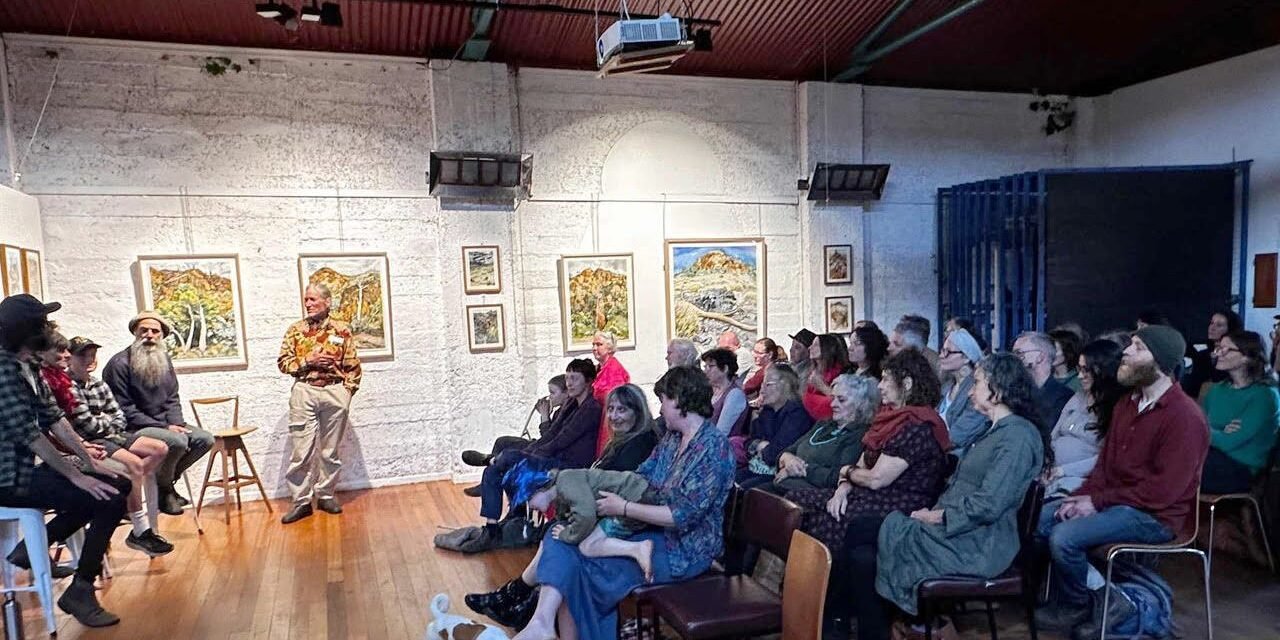
I’ve heard it said that Radius is like the village square. A place where many things happen, but also somewhere to simply be. I’ve driven past many times and noticed people gathered out the front around the tables and chairs, no scheduled event, no performance, just people connecting. This sight makes my heart sing. It feels almost radical in a world that increasingly requires a reason, a ticket, a purchase in order to belong.
When I first travelled in the early 1990s I was surprised by how many places I had assumed were public that required a monetary exchange. An entire beach in Greece roped off with deck chairs for rent. A simple city park in Italy charging entry. Even water sold only in bottles felt strange back then. Some public toilets in the UK had a price as well. These experiences stayed with me, not because of the inconvenience, but because of what they signalled – the slow erosion of shared, freely accessible space and endless commercialisation.
When we commodify our lives, something subtle but essential gets lost. When connection becomes only transactional, relationships thin out. When spaces are only available to those who can pay, participation narrows. In contrast, when we are able to connect freely and informally, we grow both individually and collectively.
Sociologist Ray Oldenburg was the first to name and describe third places in the late 1980s. He observed how car culture was reshaping society, reducing incidental interactions and replacing local gathering spots with shopping malls designed only for consumption rather than connection. In our digital age, this shift has intensified. Online interaction has many benefits, but it cannot fully replace the low-stakes, face to face encounters that help us feel grounded in our communities. As loneliness is reportedly on the rise, it may be time to consciously reinvent some of the social practices of the past.
My favourite third place as a child was the park. As an only child, any space where I might encounter other kids was gold. There was also the local creek where I spent endless hours exploring, building cubby houses, and pretending to be in far flung places. Even our street functioned as a third place – riding bikes and billy carts along the footpath, chatting with passers-by, waving to neighbours. These were environments where incidental interactions were normal and welcome.
Neighbourhoods that allow for this kind of everyday contact build social cohesion almost without trying. When we erect high fences, move everywhere by car and keep the world at arm’s length, it makes sense that loneliness can prevail and fear can creep in. Connection needs opportunity and opportunity needs space.
Art can be a powerful foundation for a third place. Our original intention with Radius wasn’t necessarily to create a third place, but that is how it’s evolved. What began as art on the walls has expanded into talks, classes, workshops, film nights, shared meals, and an ever-growing array of gatherings and community events. Art opens the door, but people make the place.
Do you have a favourite third place? Somewhere you feel welcomed without needing to explain yourself? If not, could you help create one? Perhaps in 2026 that might look like a street library on your fence, a bench seat on your nature strip, a regular open table at a café for discussions, a monthly potluck or a shared creative activity with us here at Radius. Third places don’t have to be grand or permanent, they just need to be open, inviting, and human.
A big shout out to everyone who helps makes the fun times possible at Radius, without the people who make, share, create, cook, clean, talk, dance, sing, stretch and play it couldn’t be the space we create together. Enjoy your end of year celebrations whatever form they take for you and here’s to many more good times for everyone in 2026.
Morgan Williams is the co-director with Kim Percy of Radius Art Space. His art practice spans a 30 year period and explores a diverse range of mediums and topics.