
I have recently come to a realisation. I’m thinking that all art, at its core, is simply storytelling.
Next time someone poses that age old, eternal question“What is art?” I am changing my script. Instead of claiming it is everything, or arguing that it is an act of replication, an exploration of memory, or an attempt to make sense of our world, I will keep it simple. Art is Storytelling.
For the past two and a half years, I’ve used this column to unpack art from every conceivable angle. We’ve looked at mediums, form, process and purpose. We have asked can a bucket be art? We have explored the difference between Art & Craft? Our quest is ongoing. But right now, when I look back through the catalogue of everything we’ve explored together so far, a single thread runs through every topic: the human urge to tell a story.
Sometimes that story is explicit. You stand before a canvas caked in thick impasto, feeling the heat of a summer afternoon expressed via radiant dabs of ochre. Perhaps you look at a black & white photograph of a stranger caught mid stride across a wet street, and you instantly construct a narrative for where they are rushing and why.
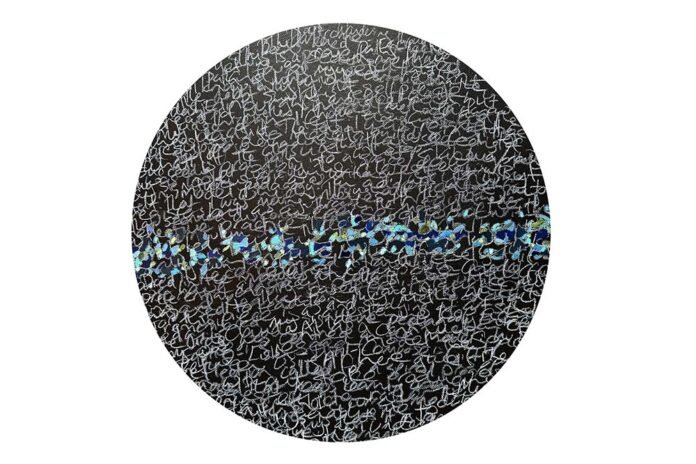
Other times, the story is far more elusive. It might reside in an ambient soundscape, not a single spoken word, where the narrative is communicated entirely through emotional resonance and spatial atmosphere. It might even be a frantic scribble of graphite across a sketchbook, a raw, physical record of an artist wrestling with a new tool or releasing an internal storm. The creator might be testing a technical boundary, capturing a fleeting portrait or simply letting their subconscious lead their brush. Even when the artist isn’t yet aware of what they are revealing, the output speaks and a story emerges.
Stories are the fundamental architecture of human connection. They are how we translate our inner lives into something accessible for someone else and help us all make sense of the world.
Several times a month, I sit in a circle with eight people. We take turns speaking and listening. On the surface, it is a storytelling group, but in practice, it is a dedicated exercise in the art of deep listening. It requires far more silence than speech. And just like an art practice, it creates an invisible bridge between people.
As the talking circle progresses, individual accounts begin to entwine. The stories are entirely unscripted, spontaneous, personal, vulnerable and often surprisingly profound. There are moments when I speak in the circle and feel as though I am listening to a stranger. It is in fact the very first time I am hearing those words leave my own mouth.
That is the magic sauce. There is something transformative about becoming vulnerable in front of others and hearing your own internal monologue materialised into the air. It forces a rare kind of clarity. It has helped me tune into my own narratives with far greater resonance, feeding directly back into my creative work and my writing.
A mentor once offered me a piece of advice that stuck: if you are ever lost for something to write, start thinking backwards. Your past is an endless archive, there is always a story waiting to be uncovered.
So, if you find yourself facing a creative block, I suggest sifting through the personal library of your mind. Find a single moment that carries a story, pull it forward and begin. That’s what I did this morning to write this article for you. I was reflecting on my circle yesterday and pondering the effect it has on my creative practice. The only question left then is what form that story will decide to take. Lately I’ve been writing, but now I’m wondering what this article may look like as a painting, in fact that probably means it’s time to get my brushes out!