
I remain committed to serving our community and warmly welcome our Interim CEO, Janet Dore. I am confident that, together, we will work towards greater stability and strengthen community confidence in the future. My sincere thanks go to our community, staff, Councillors and the wider organisation for their continued support. Below is an email I sent to the Shadow Minister for Local Government, part of which was recently read out in parliament.
Dear Shadow Minister,
I speak of my personal experience and the effect of the current LGA Legislation and strongly request consideration to vote in favour of an urgent amendment to the bill.
I am writing to draw your attention to the proposed amendment to section 229 of the Local Government Act 2020 in the Local Government Legislation Amendment (Stronger Communities) Bill 2026.
I support the Government’s move to limit automatic stand-down of councillors to circumstances where criminal proceedings are commenced by or on behalf of a law enforcement agency. This is an important safeguard that better protects the democratic rights of elected representatives and the principle of prosecutorial discretion.
However, I ask that consideration be given to the experience of Hepburn Shire Council, where 5 councillors were automatically stood down as a result of privately initiated proceedings and were unable to perform their elected roles for a significant period. During this time, the affected councillors were excluded from council meetings, decision-making processes, and their ability to represent their communities , and not able to access any council premises . The denial of access was an invasion of my rights as a rate payer where I could not visit a library, transfer station or any premises that was a council premises. I felt like a guilty prisoner in my own home.
This stand-down had a substantial impact on both the councillors and the functioning of the council. It disrupted continuity of representation for residents, placed additional pressure on remaining councillors and staff, and undermined the ability of the affected councillors to fulfil the mandate they had been given by their electorate. Even after reinstatement, the period of enforced absence is leaving a lasting imprint on the democratic functioning of the council and on those directly involved.
On a personal level, the experience was deeply distressing. I am serving as Deputy Mayor and Acting Mayor for a short time during this period, and the sudden removal of 3 more councillors including myself, from our elected roles created an immediate leadership vacuum.
The impact of this period was significant. The workload increased substantially, decision-making pressures intensified, and there was an ongoing need to support staff and reassure the community while the council was operating with reduced elected representation. This placed sustained strain on governance processes and on those required to hold the organisation together during a period of instability.
There was also a strong emotional toll associated with the experience. It was difficult to reconcile the expectation of stable democratic representation with the reality that elected councillors were unable to participate in the very decisions they had been chosen by their community to make. Over time, this created a prolonged period marked by stress, fatigue, and a persistent sense of unease about the fragility of democratic continuity at the local level.
Even after we were reinstated, the emotional and democratic impact did not simply resolve. The period of absence is leaving a lingering sense of disruption and loss of confidence in the stability of representation, both for councillors and for the community we serve. The experience continues to be felt in the way we reflect on governance, fairness, and the protection of elected office.
While the amendment is prospective, this experience highlights the need to consider whether transitional provisions or other safeguards should be included to recognise the impact of the former operation of section 229 and to ensure affected councillors are not left disadvantaged in their ongoing public service.
More broadly, I believe the reform should reinforce key principles, including the presumption of innocence, the democratic mandate of elected councillors, and the need to prevent private prosecutions alone from triggering automatic removal from office.
I would welcome your consideration of these issues as the Bill progresses.
Yours sincerely,
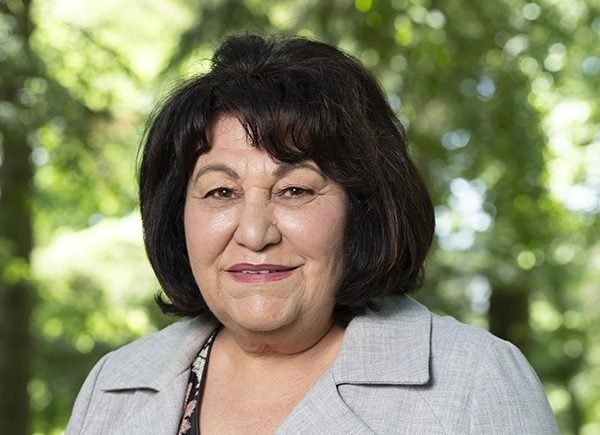
Shirley Cornish, Deputy Mayor
Hepburn Shire Council