

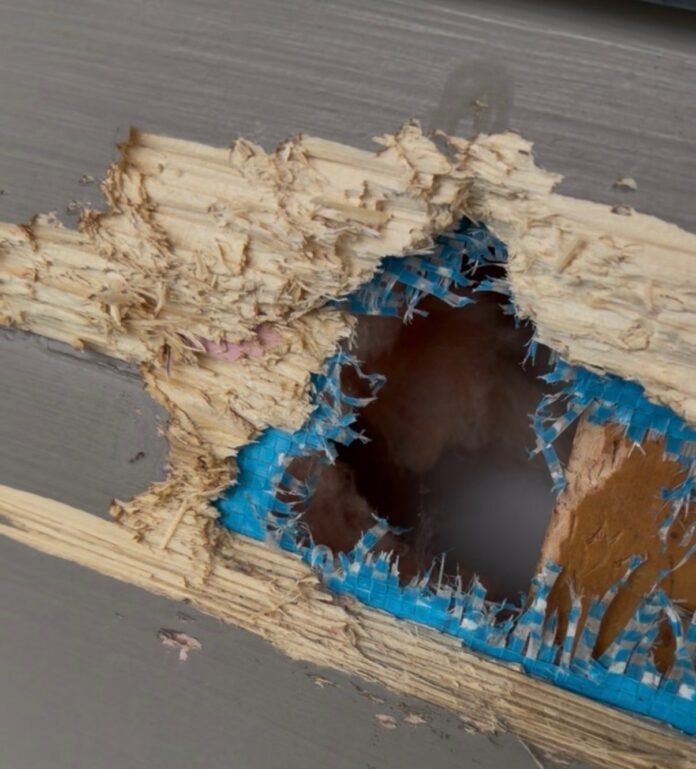
Residents across Daylesford and surrounding districts are reporting increasing damage to timber homes and other property caused by flocks of sulphur-crested cockatoos, prompting calls for greater community awareness about how to manage the issue.
Homeowners have described extensive damage to timber weatherboards, window frames, decking and outdoor structures, with some facing costly repairs after cockatoos repeatedly returned to peck and chew exposed timber. These repairs, which can be expensive are apparently not covered by insurance.
While the damage can be frustrating, wildlife experts say the behaviour is not unusual. Cockatoos are highly intelligent, social birds that live in family groups and are creatures of habit. Once a flock discovers a suitable food source or develops a habit of chewing particular materials, it is likely to return regularly and encourage other birds to join.
The problem is not limited to residential properties. Cockatoos are well known for causing damage to agricultural crops, infrastructure and public assets across Victoria. Their powerful beaks allow them to strip bark, pull apart timber and damage fittings in search of food or simply as part of their natural exploratory behaviour.
Local residents have reported seeing large flocks moving through the district, particularly during the cooler months, with some properties experiencing repeated visits over several weeks.
Wildlife authorities caution against feeding native birds, warning that human-provided food can unintentionally reinforce problem behaviour. Once birds associate people or particular locations with an easy meal, they are more likely to return and may become increasingly dependent on those food sources.
Residents are being urged not to feed cockatoos and to take practical steps to reduce attractions around their homes and farms. Measures such as securing animal feed, covering vulnerable timber surfaces, removing access to food sources and using approved deterrents can help discourage persistent flocks.
Victorian government guidelines recommend a range of non-lethal techniques to reduce damage, including exclusion methods, habitat management and behavioural deterrents. The effectiveness of these measures often depends on applying them consistently before birds establish a routine. More information can be found at Guidelines for Reducing Cockatoo Damage
For many Daylesford homeowners, the challenge is finding a balance between protecting their property and coexisting with one of Australia’s most recognisable native birds.
Please do not encourage this destructive behaviour by feeding the birds.